
Let's talk about the population of Malaysia.
Population of Malaysia: 2022-2023
As of 2023, Malaysia's population stands at 34,308,525, reflecting a 1.09% growth compared to the previous year. In 2022, the population was 33,938,221, indicating a similar 1.09% increase from the figures recorded in 2021.
Population in Malaysia: growth rate, density
Malaysia's population density is 104 per square kilometer (270 people per square mile). The population of Malaysia is growing at a rate of 1.1% per year.
Malaysian cities by population
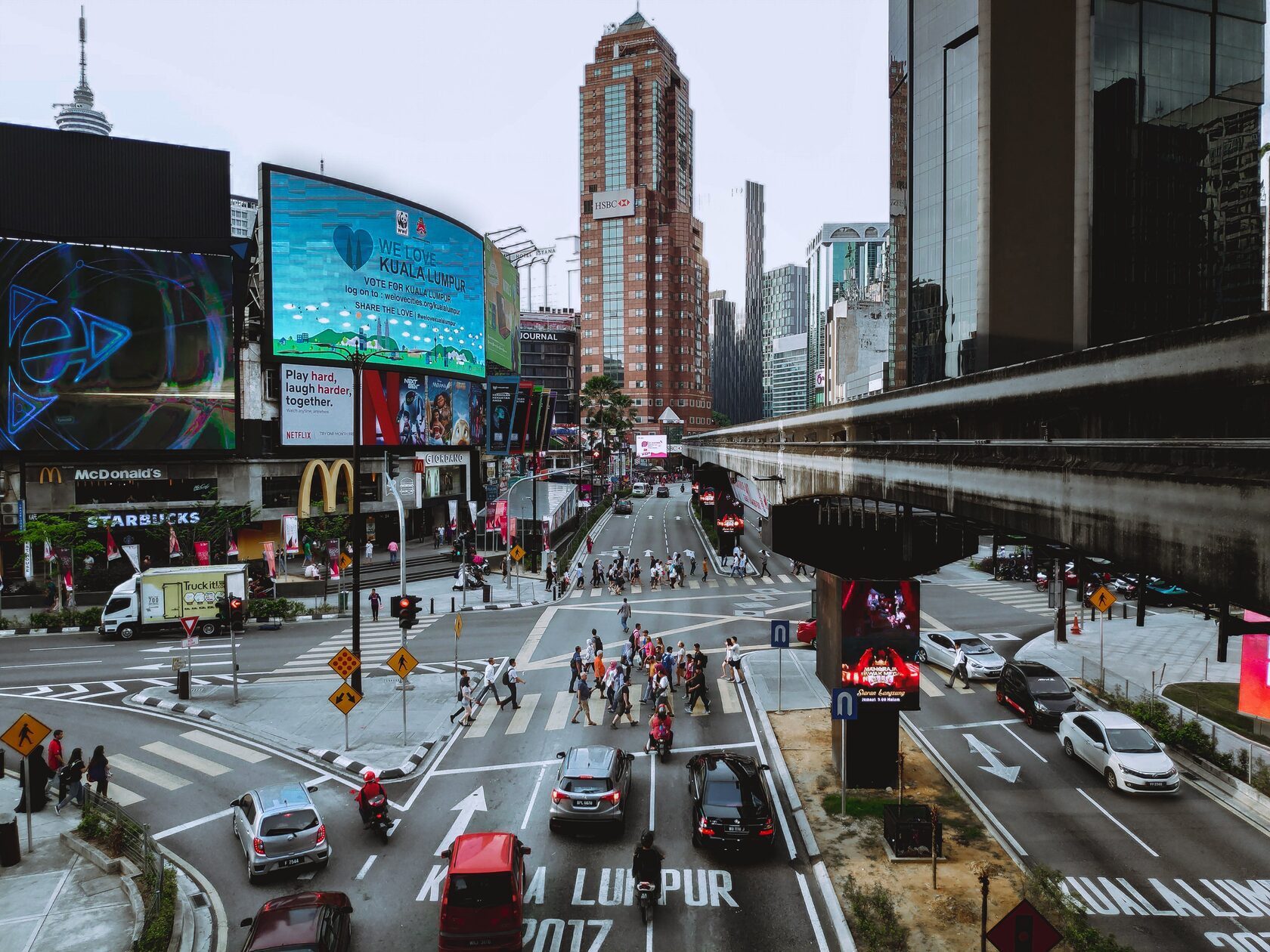
- Kuala Lumpur - Over 1.8 million
- George Town (Penang) - Around 700,000
- Ipoh (Perak) - Approximately 700,000
- Johor Bahru (Johor) - Over 800,000
- Kota Kinabalu (Sabah) - Around 500,000
- Shah Alam (Selangor) - Over 600,000
- Petaling Jaya (Selangor) - Over 600,000
- Kuching (Sarawak) - Around 600,000
- Kota Bharu (Kelantan) - Approximately 300,000
- Seremban (Negeri Sembilan) - Around 600,000
Malaysian population by religion
The religious composition in Malaysia is distributed as follows:
- Islam: 61%
- Buddhism: 20%
- Christianity: 9%
- Hinduism: 6.5%
- Confucianism, Taoism, and other Chinese folk religions: 1.5%
- Other religions: 0.5%
Muslim population of Malaysia
The Shafi‘i school of Sunni jurisprudence represents Islam in Malaysia. Traders from Persia, Arabia, China, and the Indian subcontinent introduced Islam to Malaysia, and it took root in the 15th century. The Constitution of Malaysia designates Islam as the "religion of the Federation," highlighting its significance in Malaysian society. However, constitutionally, Malaysia is defined as a secular state, allowing the practice of other religions to coexist freely.
Christian population of Malaysia
Christianity constitutes a minority religion in Malaysia, with 9.1% of the population identifying as Christians in the 2020 census. The majority of Malaysian Christians, approximately two-thirds, reside in East Malaysia, particularly in the states of Sabah and Sarawak. Sarawak, being Malaysia's largest state by land area, has a Christian majority, representing 50.1% of the population. Christianity is one of the four main religions, alongside Islam, Hinduism, and Buddhism, protected by diversity laws in Malaysia, particularly in East Malaysia.
As of 2020, half of the Malaysian Christian population identified as Catholic, 40% as Protestant, and the remaining 10% belonged to various other denominations. In 2008, major Christian denominations in the country included Roman Catholics, Anglicans, Baptists, Brethren, non-denominational churches, independent Charismatic churches, Lutherans, Methodists, Presbyterians, and Sidang Injil Borneo.
As of 2020, half of the Malaysian Christian population identified as Catholic, 40% as Protestant, and the remaining 10% belonged to various other denominations. In 2008, major Christian denominations in the country included Roman Catholics, Anglicans, Baptists, Brethren, non-denominational churches, independent Charismatic churches, Lutherans, Methodists, Presbyterians, and Sidang Injil Borneo.
Hindu population in Malaysia
Hinduism holds the position of the fourth-largest religion in Malaysia, with approximately 1.78 million Malaysian residents, constituting 6.3% of the total population, as per the 2010 Census. This figure represents an increase from 1,380,400 individuals (6.2% of the total population) reported in the 2000 Census.
The majority of Malaysian Hindus are concentrated in the western regions of Peninsular Malaysia. Notably, three states in Malaysia qualify as Hindu enclaves, where the Hindu population exceeds 10%: Negeri Sembilan (13.4%), Selangor (11.6%), and Perak (10.9%), according to the 2010 Census. The Federal Territory of Kuala Lumpur also technically falls under this category with an 8.5% Hindu population. In contrast, Sabah has the lowest percentage of Hindus, accounting for 0.1% of its population.
The majority of Malaysian Hindus are concentrated in the western regions of Peninsular Malaysia. Notably, three states in Malaysia qualify as Hindu enclaves, where the Hindu population exceeds 10%: Negeri Sembilan (13.4%), Selangor (11.6%), and Perak (10.9%), according to the 2010 Census. The Federal Territory of Kuala Lumpur also technically falls under this category with an 8.5% Hindu population. In contrast, Sabah has the lowest percentage of Hindus, accounting for 0.1% of its population.
Buddhist population of Malaysia
In the 15th century, Kedah-Langkasuka fell under the influence of Srivijaya, a powerful Buddhist kingdom that played a crucial role in the construction of significant monuments across the region, including Sumatra, Peninsular Malaysia, and Java. Historical records from 607 CE indicate the presence of the Buddhist kingdom of Che-tu in the interior of modern-day Kelantan, engaging in trade and contributing valuable resources to neighboring areas.
Fast forward to the present day, Buddhism has become the second-largest religious denomination in Malaysia, boasting approximately 5.4 million adherents, making up 19.2% of the population. The majority of Malaysian Buddhists are of Chinese ethnicity, primarily following the Mahayana tradition. The diverse Theravada Buddhist community includes ethnic Chinese, Siamese, Burmese, Sinhalese, and Indians, each maintaining temples that cater to their specific traditions.
In 1962, Vesak Day, a significant Buddhist celebration, was declared a public holiday in Malaysia, underlining the religion's importance in the country. To further promote the study and practice of Buddhism and foster solidarity among Malaysian Buddhists, the Malaysian Buddhist Council was established.
The Chinese population in Malaysia practices a syncretic blend of various faiths, with Mahayana Buddhism, Chinese folk religions, Confucianism, and Taoism being integral components. Chinese temples predominantly enshrine deities from Guangdong and Fujian provinces. The celebration of Chinese New Year as a national holiday reflects the deep intertwining of religion and culture in the lives of Malaysian Chinese.
Malaysian Chinese often integrate beliefs from multiple religions into their lives, drawing influence from Chinese traditional religion and local animism. The presence of over 150 Taoist temples in Malaysia highlights the significance of Taoism in the country, and a Taoist Association was established in 1995. Additionally, the Hui people, a Chinese population practicing Islam while retaining Chinese culture, existed in Malaysia before the Second World War, although some communities were dispersed due to development projects.
An incident in 2013 brought attention to the complex interplay of religious practices in Malaysia when Buddhists used a Muslim prayer room for meditation in Johor. This led to controversy and the subsequent demolition of the prayer room, underscoring the need for ongoing efforts to navigate and respect the diverse religious landscape in the country.
Fast forward to the present day, Buddhism has become the second-largest religious denomination in Malaysia, boasting approximately 5.4 million adherents, making up 19.2% of the population. The majority of Malaysian Buddhists are of Chinese ethnicity, primarily following the Mahayana tradition. The diverse Theravada Buddhist community includes ethnic Chinese, Siamese, Burmese, Sinhalese, and Indians, each maintaining temples that cater to their specific traditions.
In 1962, Vesak Day, a significant Buddhist celebration, was declared a public holiday in Malaysia, underlining the religion's importance in the country. To further promote the study and practice of Buddhism and foster solidarity among Malaysian Buddhists, the Malaysian Buddhist Council was established.
The Chinese population in Malaysia practices a syncretic blend of various faiths, with Mahayana Buddhism, Chinese folk religions, Confucianism, and Taoism being integral components. Chinese temples predominantly enshrine deities from Guangdong and Fujian provinces. The celebration of Chinese New Year as a national holiday reflects the deep intertwining of religion and culture in the lives of Malaysian Chinese.
Malaysian Chinese often integrate beliefs from multiple religions into their lives, drawing influence from Chinese traditional religion and local animism. The presence of over 150 Taoist temples in Malaysia highlights the significance of Taoism in the country, and a Taoist Association was established in 1995. Additionally, the Hui people, a Chinese population practicing Islam while retaining Chinese culture, existed in Malaysia before the Second World War, although some communities were dispersed due to development projects.
An incident in 2013 brought attention to the complex interplay of religious practices in Malaysia when Buddhists used a Muslim prayer room for meditation in Johor. This led to controversy and the subsequent demolition of the prayer room, underscoring the need for ongoing efforts to navigate and respect the diverse religious landscape in the country.
Malaysian population by race
The demographic composition of Malaysia reflects a majority of Bumiputera, constituting 62.5% of the population. This category includes Malays and indigenous peoples, encompassing Orang Asli, Dayak, and Anak Negeri. The Chinese community makes up 20.6%, followed by Indians at 6.2%. The remaining 0.9% comprises other ethnic groups, while non-citizens account for 9.8% of the total population.
Chinese population in Malaysia
The largest minority in Malaysia comprises ethnic Han Chinese, totaling approximately 7.4 million individuals, constituting nearly one-third of the country's population. They primarily communicate in various languages such as Hakka, Cantonese, Hokkien, Teochew, Hainanese, Mandarin, and Hokchiu. The principal religions among the ethnic Han Chinese in Malaysia include Buddhism, Christianity, Taoism, and Confucianism.
While Mandarin serves as the language of instruction in private Chinese schools, the everyday languages spoken by most Chinese in the country are Hakka, Cantonese, Hokkien, Teochew, Hainanese, and Hokchiu. Geographically, the Hokkien community tends to be concentrated in Penang, while Kuala Lumpur hosts significant populations of Cantonese and Hakka speakers. Mandarin is prevalent in the southern peninsula as well as in Sabah and Sarawak, where it coexists with Hakka.
While Mandarin serves as the language of instruction in private Chinese schools, the everyday languages spoken by most Chinese in the country are Hakka, Cantonese, Hokkien, Teochew, Hainanese, and Hokchiu. Geographically, the Hokkien community tends to be concentrated in Penang, while Kuala Lumpur hosts significant populations of Cantonese and Hakka speakers. Mandarin is prevalent in the southern peninsula as well as in Sabah and Sarawak, where it coexists with Hakka.
Tamil population in Malaysia
Tamil Malaysians, also referred to as Malaysian Tamilar, are individuals with either full or partial Tamil ancestry who have either been born in Malaysia or migrated from Tamil Nadu, India, and the Tamil regions of northeast Sri Lanka. The majority, comprising 80% of the Malaysian Indian population totaling 1.8–2 million people, have roots in Indian Tamil ethnic groups originating from Tamil Nadu and Sri Lanka. The significant migration of Tamil Malaysians traces back to the British Raj era, when Britain facilitated the movement of Indian workers to engage in plantation work. Despite this historical context, there are also established Tamil communities in Malaysia that predate British colonialism.
Indian population in Malaysia
Malaysian Indians, also known as Indian Malaysians, are individuals in Malaysia who hold citizenship and have South Asian or Indian ancestry. Historical records indicate that during the Chola reign in the Southeast Asian region, parts of Malaysia were captured by the Cholas. Presently, Malaysian Indians constitute the third-largest ethnic group in Malaysia, following the Malays and the Chinese. The majority of Malaysian Indians are of Tamil ethnicity, with smaller communities including Malayalees, Telugus, Punjabis, and Gujaratis. Malaysian Indians rank as the fifth-largest community of Overseas Indians worldwide.
How large is the Dalit population of Malaysia?
In Malaysia, the Dalit population is estimated to be around 100,000.
Malaysian population by age
The age distribution in Malaysia is as follows:
- Age group 0-14: 22.4%
- Age group 15-64: 69.8%
- Age group 60+:11.8%
- Age group 65+: 7.8%
Malaysian aging population
Based on the latest estimates from DOSM, the demographic composition of the population aged 65 years and older (considered as old age) has seen a rise from 7.2% in 2022 to 7.4% in 2023. This increase corresponds to a population of 2.5 million individuals, signaling a trend of population aging in Malaysia.