
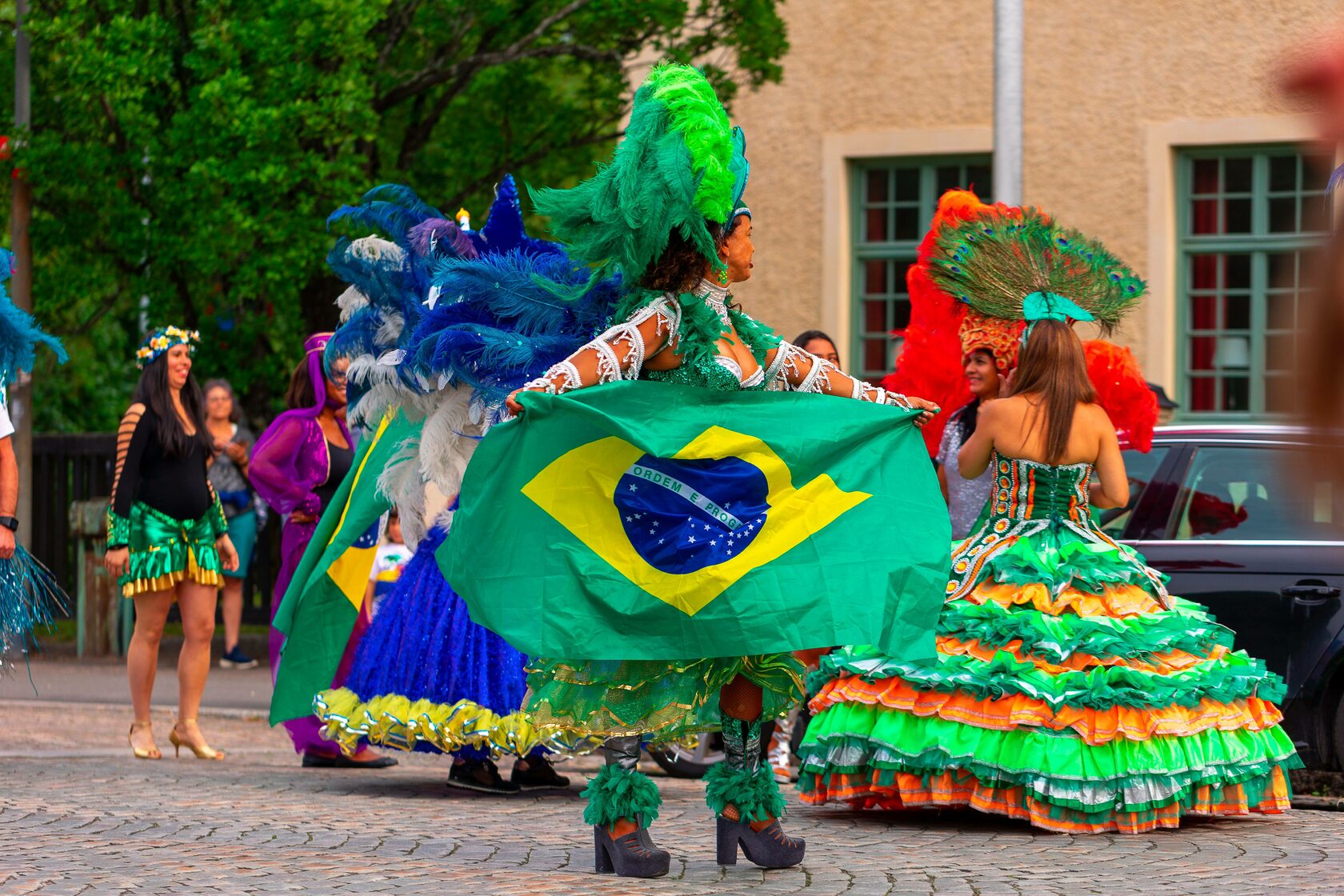
Let's talk about Brazilian culture.
How has Brazil culture evolved over time?
- Indigenous Roots (Pre-1500s): Before the arrival of the Portuguese in 1500, Brazil was home to a diverse range of indigenous cultures. These native societies had their own languages, traditions, and artistic expressions.
- Portuguese Colonization (1500-1822): The arrival of the Portuguese marked the beginning of colonization. This period saw the introduction of Portuguese language, Catholicism, and European customs. The blending of European and indigenous cultures laid the foundation for the rich cultural diversity of modern Brazil.
- African Influence (16th-19th centuries): The Portuguese brought enslaved Africans to Brazil to work on sugar plantations. This African influence is profound and is evident in Brazilian music, dance, religion (Candomblé and Umbanda), and culinary traditions.
- Independence and Imperial Era (1822-1889): Brazil gained independence from Portugal in 1822 and became an empire. During this period, there was a conscious effort to create a distinct national identity, blending European influences with local traditions.
- Abolition of Slavery (1888): Slavery was officially abolished in Brazil in 1888. The end of slavery had a significant impact on Brazilian culture, as Afro-Brazilian traditions continued to thrive and influence the broader culture.
- Early 20th Century: The early 20th century saw a surge of interest in national identity and cultural expression. The Modernist Movement of the 1920s, led by figures like Oswald de Andrade, sought to create a uniquely Brazilian art and literature that celebrated the country's cultural diversity.
- Mid-20th Century: The mid-20th century brought about significant urbanization and industrialization. This period witnessed the popularization of samba, bossa nova, and other musical genres that have since become synonymous with Brazilian culture.
- Military Dictatorship (1964-1985): The military dictatorship had both stifling and liberating effects on culture. While some forms of artistic expression were censored, others served as a form of resistance. The Tropicália movement emerged during this time, blending traditional Brazilian music with global influences.
- Late 20th Century to Present: Brazil has continued to be a cultural powerhouse. Its music, especially genres like samba, bossa nova, and funk, has gained international acclaim. Brazilian cinema, literature, and visual arts also enjoy global recognition. The country's cultural scene reflects a dynamic blend of traditional roots and contemporary influences.
What is Brazilian culture known for?
Renowned for its lush rainforests, stunning beaches, and vibrant cities like Rio de Janeiro and Brasilia, Brazilian society is a melting pot of indigenous, Portuguese, European, and African influences. The cultural tapestry of Brazil is woven with diverse ancestries, creating a rich and multifaceted social landscape. At the heart of Brazilian culture is Carnaval, a globally celebrated extravaganza, along with local festivals, lively street parades, and an unparalleled music scene.
Brazil's cultural offerings engage the senses in a myriad of ways. The beats of Samba, the nation's most popular dance, resonate alongside other rhythmic genres like Pagode (akin to Samba), Axé (soulful music), and Bossa Nova (a fusion of Brazilian pop and jazz). The air is filled with the enticing aroma of street delicacies such as grilled meats and fried pastries, adding to the sensory delight of Brazil's cultural experience.
Brazil's cultural offerings engage the senses in a myriad of ways. The beats of Samba, the nation's most popular dance, resonate alongside other rhythmic genres like Pagode (akin to Samba), Axé (soulful music), and Bossa Nova (a fusion of Brazilian pop and jazz). The air is filled with the enticing aroma of street delicacies such as grilled meats and fried pastries, adding to the sensory delight of Brazil's cultural experience.
Brazil food culture
Brazilian cuisine, deeply rooted in the nation's diverse ethnic heritage and the richness of its land, showcases a vibrant tapestry of flavors. Central to the Brazilian diet are staples like rice, beans, and manioc—a root vegetable that serves as the foundation for farinha, a finely textured, yellowish flour. The culinary palette is further enriched with an array of meats, poultry, and fish, seamlessly woven into these foundational elements in diverse and flavorful combinations.
Brazilians coffee culture
While Brazil has made a significant global impact on the coffee industry, the domestic consumption of this beloved beverage often takes a back seat in discussions. In Brazil, coffee holds a larger role beyond just a social custom—it is intertwined with livelihoods and plays a vital part in the country's economic growth. Despite its crucial economic role, coffee remains an integral part of daily life in Brazil, enjoyed in various contexts such as relaxation, celebration, or socializing.
Coffee consumption is a pervasive habit throughout the day in Brazil, and the term 'cafezinho,' translating to 'small coffee,' is warmly embraced. This small cup is savored in frequent intervals, and it's not uncommon to encounter coffee dispensers with stacks of cups at places like petrol stations and restaurants, allowing patrons to help themselves at no cost. Due to the regularity of consumption, the coffee served domestically may not match the high-quality Brazilian coffee beans exported globally; however, even the more modest varieties offer a delightful flavor in each cup.
Coffee consumption is a pervasive habit throughout the day in Brazil, and the term 'cafezinho,' translating to 'small coffee,' is warmly embraced. This small cup is savored in frequent intervals, and it's not uncommon to encounter coffee dispensers with stacks of cups at places like petrol stations and restaurants, allowing patrons to help themselves at no cost. Due to the regularity of consumption, the coffee served domestically may not match the high-quality Brazilian coffee beans exported globally; however, even the more modest varieties offer a delightful flavor in each cup.
Soccer in Brazil culture
Soccer, or football, holds an unparalleled status in Brazil, deeply ingrained in the nation's cultural fabric and serving as a key element of its identity. The Brazil national football team stands as a symbol of pride, having clinched the FIFA World Cup five times—more than any other team—in 1958, 1962, 1970, 1994, and 2002. Remarkably, Brazil and Germany share the distinction of qualifying for every World Cup they entered, with Brazil being the sole participant in every competition to date.
In addition to World Cup triumphs, Brazil secured an Olympic gold medal at the 2016 Summer Olympics in Rio de Janeiro and repeated the feat at the 2020 Summer Olympics in Tokyo. The illustrious Pelé, a football legend, clinched three World Cups, leaving an indelible mark on the sport.
Brazil's contribution to football extends beyond victories, with a roster of iconic players such as Garrincha, Cafu, Roberto Carlos, Romário, Rivaldo, Ronaldo Nazário, Ronaldinho, Kaká, Neymar, Falcão (in futsal), and Marta (in the women's game). These athletes have not only excelled on the field but have also become cultural icons.
The Brazilian Football Confederation serves as the governing body overseeing the nation's passion for soccer, shaping the trajectory of the sport within the country's vibrant cultural landscape.
In addition to World Cup triumphs, Brazil secured an Olympic gold medal at the 2016 Summer Olympics in Rio de Janeiro and repeated the feat at the 2020 Summer Olympics in Tokyo. The illustrious Pelé, a football legend, clinched three World Cups, leaving an indelible mark on the sport.
Brazil's contribution to football extends beyond victories, with a roster of iconic players such as Garrincha, Cafu, Roberto Carlos, Romário, Rivaldo, Ronaldo Nazário, Ronaldinho, Kaká, Neymar, Falcão (in futsal), and Marta (in the women's game). These athletes have not only excelled on the field but have also become cultural icons.
The Brazilian Football Confederation serves as the governing body overseeing the nation's passion for soccer, shaping the trajectory of the sport within the country's vibrant cultural landscape.
Brazil work and business culture
In Brazil, work and business culture is marked by a unique blend of professionalism and a relaxed, social atmosphere. Building strong personal relationships is a cornerstone of business dealings, and initial meetings often involve informal conversations before diving into business matters. Demonstrating warmth and friendliness is crucial, and business discussions may extend into social settings.
Flexibility in scheduling is common, and punctuality is appreciated but not as rigorously adhered to as in some other cultures. Building trust is paramount, and business negotiations may take time as building relationships is prioritized over immediate deal closures. Additionally, face-to-face interactions are highly valued, and establishing a personal connection can greatly influence business success.
Hierarchy plays a role in Brazilian workplaces, with respect for authority and seniority being important. However, the work environment is generally collaborative, and teamwork is emphasized. Open communication and the ability to navigate through bureaucracy are essential skills for success in the Brazilian business landscape.
Flexibility in scheduling is common, and punctuality is appreciated but not as rigorously adhered to as in some other cultures. Building trust is paramount, and business negotiations may take time as building relationships is prioritized over immediate deal closures. Additionally, face-to-face interactions are highly valued, and establishing a personal connection can greatly influence business success.
Hierarchy plays a role in Brazilian workplaces, with respect for authority and seniority being important. However, the work environment is generally collaborative, and teamwork is emphasized. Open communication and the ability to navigate through bureaucracy are essential skills for success in the Brazilian business landscape.
Beach culture in Brazil
When embracing the vibrant beach culture in Brazil, it's essential to adhere to a few key do's and don'ts to ensure an enjoyable and culturally respectful experience. Opt for purchasing a trendy bikini or sunga locally, as Rio's styles are cutting-edge, and prices are generally reasonable. Embrace the casual beach atmosphere by wearing flip-flops to and from the beach, leaving shoes behind.
For a carefree beach day, avoid bringing valuables, opting for a beach bag over a purse, and kindly ask a trustworthy neighbor to watch over your belongings while you take a dip. Light and stylish cangas replace traditional towels, and for added comfort, consider renting a beach chair. Explore the diverse food and drink options from beach vendors rather than schlepping your own.
Be mindful of local swimming practices, avoiding areas marked by red flags due to strong currents. Protect yourself from sunburn by applying sunscreen, as locals do.
For female beachgoers, embrace the body-positive culture but refrain from topless sunbathing. Instead, cover up lightly with a fashionable top, microshorts, or skirts when walking to and from the beach. Male beachgoers should opt for stylish sungas over Speedo-style suits, reserving surfing shorts for their intended purpose. Flaunt a bare chest to and from the beach, but consider wearing a T-shirt elsewhere.
For a carefree beach day, avoid bringing valuables, opting for a beach bag over a purse, and kindly ask a trustworthy neighbor to watch over your belongings while you take a dip. Light and stylish cangas replace traditional towels, and for added comfort, consider renting a beach chair. Explore the diverse food and drink options from beach vendors rather than schlepping your own.
Be mindful of local swimming practices, avoiding areas marked by red flags due to strong currents. Protect yourself from sunburn by applying sunscreen, as locals do.
For female beachgoers, embrace the body-positive culture but refrain from topless sunbathing. Instead, cover up lightly with a fashionable top, microshorts, or skirts when walking to and from the beach. Male beachgoers should opt for stylish sungas over Speedo-style suits, reserving surfing shorts for their intended purpose. Flaunt a bare chest to and from the beach, but consider wearing a T-shirt elsewhere.
Brazil music culture
Brazil's music culture is a dynamic tapestry woven with diverse rhythms, captivating melodies, and a rich blend of cultural influences. Renowned globally for its vibrant and infectious beats, Brazil's musical landscape encompasses genres ranging from samba and bossa nova to forró, axé, and funk carioca. Rooted in the country's multicultural heritage, Brazilian music reflects the fusion of indigenous, African, European, and indigenous influences.
Samba, with its pulsating percussion and lively dance, stands as an iconic symbol of Brazil's musical identity. Bossa nova, known for its smooth jazz-infused rhythms, gained international acclaim with artists like Antonio Carlos Jobim and João Gilberto. Beyond these classics, contemporary genres like funk carioca, characterized by electronic beats and energetic vocals, showcase the constant evolution of Brazil's music scene.
Samba, with its pulsating percussion and lively dance, stands as an iconic symbol of Brazil's musical identity. Bossa nova, known for its smooth jazz-infused rhythms, gained international acclaim with artists like Antonio Carlos Jobim and João Gilberto. Beyond these classics, contemporary genres like funk carioca, characterized by electronic beats and energetic vocals, showcase the constant evolution of Brazil's music scene.
Brazil death culture
In contrast to some other South American traditions, Brazilians approach death with a unique cultural perspective. Rather than celebrating death, the focus is on acknowledging and expressing the profound sadness and pain that accompany the loss of a loved one. In moments of mourning, it is common to hear vocal expressions of grief, with mourners often wailing, crying loudly, and engaging in emotional displays of affection, such as hugging and kissing the deceased.
Afro-brazilian culture: symbol
One powerful symbol representing Afro-Brazilian culture is the "Candomblé" religious tradition. Candomblé originated among the Afro-Brazilian communities, particularly descendants of enslaved Africans, and it combines elements of traditional Yoruba, Fon, and Bantu beliefs with Catholicism. The symbol most associated with Candomblé is the "Orixá," representing divine spiritual entities that embody natural elements and human characteristics.
Each Orixá has distinct qualities, roles, and associated symbols, such as colors, ritual objects, and sacred plants. These symbols are often utilized in Candomblé ceremonies, rituals, and artistic expressions, serving as a visual language that connects practitioners with their cultural and spiritual roots. The Orixás symbolize resilience, spiritual connection, and the preservation of Afro-Brazilian heritage in the face of historical challenges and adversity.
Each Orixá has distinct qualities, roles, and associated symbols, such as colors, ritual objects, and sacred plants. These symbols are often utilized in Candomblé ceremonies, rituals, and artistic expressions, serving as a visual language that connects practitioners with their cultural and spiritual roots. The Orixás symbolize resilience, spiritual connection, and the preservation of Afro-Brazilian heritage in the face of historical challenges and adversity.
Brazil indigenous culture
Brazilian indigenous culture is a rich mosaic shaped by diverse traditions, languages, and customs of numerous indigenous ethnic groups inhabiting the region for centuries. With over 300 different indigenous communities, Brazil stands as one of the most culturally diverse places globally. These communities contribute to the country's cultural richness through their unique languages, spiritual beliefs, artistic expressions, and sustainable practices deeply connected to nature.
Brazilian indigenous culture is deeply intertwined with the natural world, showcasing profound respect for the surrounding environment and a holistic understanding of their place in it. Traditional rituals, ceremonies, and forms of art reflect this intricate connection, often drawing inspiration from the surrounding ecosystems and biodiversity. Despite historical challenges, including colonization and encroachment on their territories, many indigenous communities continue to preserve and revitalize their cultural heritage, infusing the Brazilian cultural landscape with a resilient spirit.
Brazilian indigenous culture is deeply intertwined with the natural world, showcasing profound respect for the surrounding environment and a holistic understanding of their place in it. Traditional rituals, ceremonies, and forms of art reflect this intricate connection, often drawing inspiration from the surrounding ecosystems and biodiversity. Despite historical challenges, including colonization and encroachment on their territories, many indigenous communities continue to preserve and revitalize their cultural heritage, infusing the Brazilian cultural landscape with a resilient spirit.
Youth culture in Brazil
Youth culture in Brazil is vibrant, diverse, and influenced by a combination of local traditions and global trends. Brazilian youth, often referred to as "jovens," embrace a dynamic mix of music, fashion, sports, and social activities that reflect the country's multicultural identity. Music plays a particularly significant role, with genres like funk, sertanejo, and pagode dominating the youth scene.
The influence of Brazilian Carnival and street parties is evident in the exuberant and inclusive nature of youth gatherings. Social media platforms also play a crucial role in shaping youth culture, allowing young Brazilians to connect, share experiences, and express their identities online.
Sports, especially football (soccer), hold a special place in Brazilian youth culture, contributing to a sense of national pride and camaraderie. Additionally, issues such as social justice, diversity, and environmental awareness are increasingly becoming integral to the concerns of the younger generation, reflecting a desire for positive change.
The influence of Brazilian Carnival and street parties is evident in the exuberant and inclusive nature of youth gatherings. Social media platforms also play a crucial role in shaping youth culture, allowing young Brazilians to connect, share experiences, and express their identities online.
Sports, especially football (soccer), hold a special place in Brazilian youth culture, contributing to a sense of national pride and camaraderie. Additionally, issues such as social justice, diversity, and environmental awareness are increasingly becoming integral to the concerns of the younger generation, reflecting a desire for positive change.
Culture in Brazil on Reddit
Bill from SF says: "Few elements are universally shared across Brazil, with Portuguese being a common language, albeit with notable regional variations, and the widespread enthusiasm for football, Festa Junina, and Carnaval. However, even these "national passions" exhibit unique characteristics in different regions of the country.
Brazil's vast size and diversity necessitate an exploration of its distinct regional cultures. From the gaúcho culture of the south to the caiçara, caipira, sertanejo, and ribeirinho traditions, each contributing to the country's rich tapestry. Additionally, the urban cultures vary significantly from Porto Alegre to Manaus, Recife, Rio, and beyond, providing diverse experiences reflective of Brazil's multifaceted identity."
Brazil's vast size and diversity necessitate an exploration of its distinct regional cultures. From the gaúcho culture of the south to the caiçara, caipira, sertanejo, and ribeirinho traditions, each contributing to the country's rich tapestry. Additionally, the urban cultures vary significantly from Porto Alegre to Manaus, Recife, Rio, and beyond, providing diverse experiences reflective of Brazil's multifaceted identity."
Culture shocked in Brazil on Reddit
Olaf from Berlin says: "In Brazil, particularly in São Paulo, it is a common practice for individuals employed in low-paying service jobs such as au pairs, housemaids, cleaners, and office attendants to wear entirely white uniforms and utilize separate elevators or entrances, maintaining a submissive demeanor. This practice is reflective of a significant income disparity linked to racial differences, where the majority of these positions are occupied by individuals of black or native indigenous descent, while affluent white Europeans predominantly hold supervisory roles. The stark contrast in appearance and social standing, reminiscent of historical slavery, is evident, with such services being relatively affordable for those with median to high incomes. The acceptance of this disparity is palpable, exemplified by the sight of a stylish, affluent white couple walking ahead, while a visibly economically disadvantaged young black woman, dressed in a white uniform, pushes their baby pram a few steps behind, highlighting the persisting socio-economic divide. The observer finds the entire scenario repugnant and degrading."