
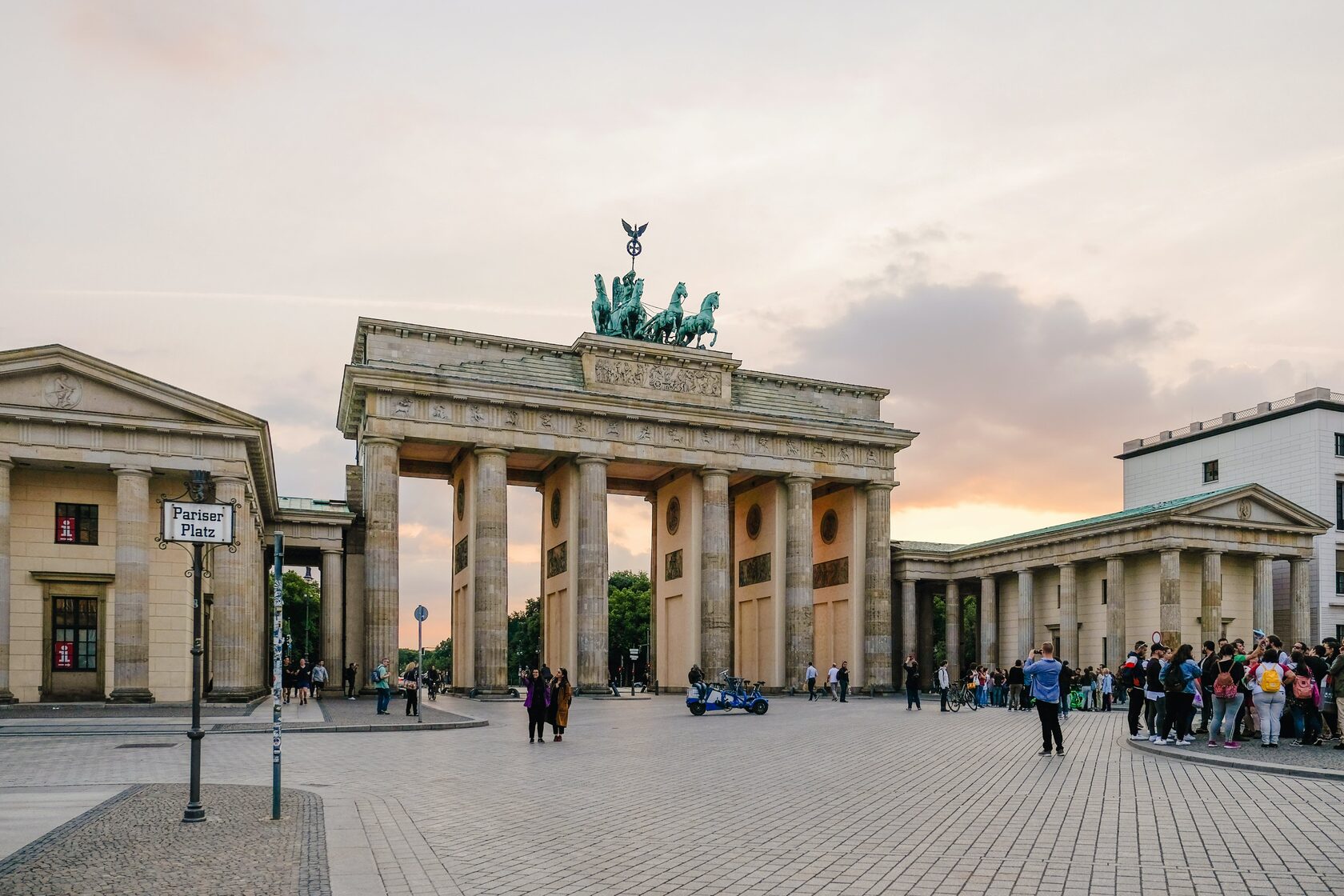
Let's talk about the population of Germany.
Population of Germany: history
From 1871 to 1945, Germany experienced a trajectory from unification and rapid growth to the devastating impact of two world wars. In the early years of unification, Germany emerged as a powerful European nation, establishing colonies in Africa and the Pacific. However, the assassination of the Austro-Hungarian heir sparked World War I, leading Germany to mobilize a massive army.
During the war, Germany faced increasing hardships, with both military and civilian populations suffering from malnutrition. The conflict resulted in over 2 million deaths and considerable demographic changes due to mass displacement and the Treaty of Versailles.
The interwar period saw economic struggles, exacerbated by reparations and mismanagement. Hyperinflation in 1923 and the Great Depression in 1929 further destabilized Germany. Adolf Hitler's rise to power exploited public discontent, and when he became Chancellor in 1933, Germany defied the Treaty of Versailles.
Hitler's territorial ambitions triggered the invasion of Poland in 1939, marking the start of World War II. Germany's full engagement in the war led to significant mobilization and over 13 million men participating. After the Axis powers' defeat, Germany was divided into four zones administered by France, the Soviet Union, the UK, and the U.S.
From 1945 to 2020, Cold War tensions resulted in the emergence of two distinct German states: the communist German Democratic Republic (DDR) in the east and the democratic Federal Republic of Germany in the west. Berlin was similarly divided. West Germany rapidly recovered economically, becoming a key player in international affairs, while East Germany faced lower living standards.
The collapse of the communist system and growing opposition in the east led to German reunification in 1990, symbolized by the dismantling of the Berlin Wall. The post-reunification era witnessed mass migration from the east to the west in search of economic opportunities. Germany's economic growth continued, making it the fourth-largest global economy by 2020. Despite challenges related to regional disparities, the country excelled in human development, healthcare, freedom, and education.
Germany, with almost 84 million people in 2020, is the most populous country in Europe after Russia. Migration has played a crucial role in sustaining population growth, although a recent increase in the fertility rate suggests the potential for natural growth in the future.
During the war, Germany faced increasing hardships, with both military and civilian populations suffering from malnutrition. The conflict resulted in over 2 million deaths and considerable demographic changes due to mass displacement and the Treaty of Versailles.
The interwar period saw economic struggles, exacerbated by reparations and mismanagement. Hyperinflation in 1923 and the Great Depression in 1929 further destabilized Germany. Adolf Hitler's rise to power exploited public discontent, and when he became Chancellor in 1933, Germany defied the Treaty of Versailles.
Hitler's territorial ambitions triggered the invasion of Poland in 1939, marking the start of World War II. Germany's full engagement in the war led to significant mobilization and over 13 million men participating. After the Axis powers' defeat, Germany was divided into four zones administered by France, the Soviet Union, the UK, and the U.S.
From 1945 to 2020, Cold War tensions resulted in the emergence of two distinct German states: the communist German Democratic Republic (DDR) in the east and the democratic Federal Republic of Germany in the west. Berlin was similarly divided. West Germany rapidly recovered economically, becoming a key player in international affairs, while East Germany faced lower living standards.
The collapse of the communist system and growing opposition in the east led to German reunification in 1990, symbolized by the dismantling of the Berlin Wall. The post-reunification era witnessed mass migration from the east to the west in search of economic opportunities. Germany's economic growth continued, making it the fourth-largest global economy by 2020. Despite challenges related to regional disparities, the country excelled in human development, healthcare, freedom, and education.
Germany, with almost 84 million people in 2020, is the most populous country in Europe after Russia. Migration has played a crucial role in sustaining population growth, although a recent increase in the fertility rate suggests the potential for natural growth in the future.
Population of Germany: 2022-2023
In 2023, Germany's population recorded a slight decrease to 83,294,633, representing a 0.09% decline compared to the previous year. In 2022, the population was 83,369,843, reflecting a marginal 0.05% decrease from the figures reported in 2021.
Population of Germany: density, growth rate
Germany has a population density of 239 people per square kilometer or 619 people per square mile. The population of Germany is increasing at a rate of approximately 0.1% per year.
What population density is considered high in Germany?
In general, a population density of over 200 people per square kilometer is often considered high, especially in the European context. However, what is considered high can vary depending on the country's geography, infrastructure, and social and economic factors. Urban areas and metropolitan regions in Germany, such as Berlin, Hamburg, or the Rhine-Ruhr area, can have much higher population densities compared to the national average.
Aging population in Germany
- 0-14 years: Around 12-14% of the population.
- 15-24 years: Around 11-12% of the population.
- 25-54 years: The largest age group, typically around 40-45% of the population.
- 55-64 years: Around 13-15% of the population.
- 65 years and over: Around 17-20% of the population.
Germany's population by religion
Approximately 27% of Germany's populace identifies as Catholic, while 25% is affiliated with the EKD—an alliance encompassing Lutheran, Reformed (Calvinist), and United (Prussian Union) Protestant regional churches. Other Protestant factions, such as the New Apostolic Church, Baptist communities, and non-denominational Christians, constitute roughly 2%. Orthodox Christians make up 1.9%.
Based on recent government approximations, about 5.7% of the population adheres to Islam. Within the Muslim community, 75% are Sunni, 13% Alevi, and 7% Shia. Smaller groups include Alawites (70,000), Ahmadis (35,000), and Sufis (10,000). Intelligence reports suggest around 12,150 Salafi Muslims. Estimations for the Jewish population vary, with the Central Council of Jews placing it at 94,771, while other assessments, including unaffiliated Jews, suggest around 190,000. According to the NGO Religious Studies Media and Information Service (REMID), Buddhists (270,000); Jehovah’s Witnesses (167,000); Hindus (100,000); Yezidis (100,000); members of The Church of Jesus Christ of Latter-day Saints (40,000); Sikhs (10,000-15,000); and members of the COS (3,400) together make up less than 1% of the population. According to the Research Group Worldviews Germany, approximately 39% of the population either has no religious affiliation or belongs to religious groups not represented in government statistics.
Based on recent government approximations, about 5.7% of the population adheres to Islam. Within the Muslim community, 75% are Sunni, 13% Alevi, and 7% Shia. Smaller groups include Alawites (70,000), Ahmadis (35,000), and Sufis (10,000). Intelligence reports suggest around 12,150 Salafi Muslims. Estimations for the Jewish population vary, with the Central Council of Jews placing it at 94,771, while other assessments, including unaffiliated Jews, suggest around 190,000. According to the NGO Religious Studies Media and Information Service (REMID), Buddhists (270,000); Jehovah’s Witnesses (167,000); Hindus (100,000); Yezidis (100,000); members of The Church of Jesus Christ of Latter-day Saints (40,000); Sikhs (10,000-15,000); and members of the COS (3,400) together make up less than 1% of the population. According to the Research Group Worldviews Germany, approximately 39% of the population either has no religious affiliation or belongs to religious groups not represented in government statistics.
Jewish population in Germany
The Jewish demographic in Germany comprises various categories:
- Core Jewish population: 118,000
- Population with Jewish parents: 175,000
- Enlarged Jewish population: 225,000
- Law of Return Jewish population: 275,000
Muslim population in Germany
The significance of Islam in Germany has experienced a notable increase, particularly following labor migration in the 1960s and subsequent waves of political refugees since the 1970s.
As per a representative survey conducted in 2019, it is approximated that there were between 5.3 million to 5.6 million Muslims with a migrant background, constituting approximately 6.4% to 6.7% of the population. This figure does not account for Muslims without a migrant background. A similar survey in 2016 estimated the number to be between 4.4 million to 4.7 million, comprising 5.4% to 5.7% of the population. An earlier survey in 2009 suggested a total Muslim population of up to 4.3 million at that time. There are also higher estimates, such as the German Islam Conference's assertion that Muslims represented 7% of the population in Germany in 2012.
In a 2014 academic publication, it was approximated that around 100,000 Germans converted to Islam, a figure comparable to conversion rates observed in France and the United Kingdom.
As per a representative survey conducted in 2019, it is approximated that there were between 5.3 million to 5.6 million Muslims with a migrant background, constituting approximately 6.4% to 6.7% of the population. This figure does not account for Muslims without a migrant background. A similar survey in 2016 estimated the number to be between 4.4 million to 4.7 million, comprising 5.4% to 5.7% of the population. An earlier survey in 2009 suggested a total Muslim population of up to 4.3 million at that time. There are also higher estimates, such as the German Islam Conference's assertion that Muslims represented 7% of the population in Germany in 2012.
In a 2014 academic publication, it was approximated that around 100,000 Germans converted to Islam, a figure comparable to conversion rates observed in France and the United Kingdom.
Turkish population in Germany
The community of Turkish origin in Germany, commonly referred to as German Turks or Turkish Germans, consists of individuals with Turkish ethnicity residing in Germany. This classification is inclusive of individuals born in Germany with either complete or partial Turkish heritage. While the majority of Turks in Germany trace their roots to Turkey, there are significant ethnic Turkish communities originating from Southeastern Europe (such as Balkan Turks from countries like Bulgaria, Greece, North Macedonia, Serbia, and Romania), the island of Cyprus (encompassing Turkish Cypriots from both the Republic of Cyprus and Northern Cyprus), as well as Turkish groups from other parts of the Levant (including Iraq, Lebanon, and Syria). At present, ethnic Turkish individuals form the largest ethnic minority in Germany, representing the most significant Turkish population within the global Turkish diaspora.
Asian population in Germany
Asians in Germany, also known as German Asians, are individuals holding German citizenship with either complete or partial Asian heritage. The term Asian German is also used for foreign residents of Asian origin residing in the Federal Republic of Germany. The presence of German Asians dates back to the 19th century, with origins primarily from countries such as Vietnam, China, Thailand, India, Afghanistan, Kazakhstan, Sri Lanka, South Korea, Japan, or the Philippines. While official census data in Germany does not specifically collect information on ethnicity or race, focusing instead on nationality, statistical reports include figures for individuals with an Asian "migrant background."
As of 2011, approximately 1,890,000 people or descendants from Southeast Asia, East Asia, Central Asia, or South Asia were living in Germany. It's important to note that these figures exclude Western Asians, such as Anatolian Turks, Kurds, Assyrians, Mizrahi Jews, Arabs, or Iranians.
As of 2011, approximately 1,890,000 people or descendants from Southeast Asia, East Asia, Central Asia, or South Asia were living in Germany. It's important to note that these figures exclude Western Asians, such as Anatolian Turks, Kurds, Assyrians, Mizrahi Jews, Arabs, or Iranians.
Black population in Germany
Cities like Hamburg and Frankfurt, once occupied by foreign forces after World War II and now influenced by recent immigration, host significant Afro-German populations. Due to contemporary trade and migration trends, urban areas such as Frankfurt, Berlin, Munich, and Cologne are witnessing a growing presence of Afro-Germans. In the year 2020, approximately 1 million individuals were estimated to be Afro-Germans.
Indian population in Germany
The Indian community in Germany comprises Indian expatriates living in the country, along with German citizens of Indian heritage. In 2009, the German government estimated that there were 110,204 individuals of Indian descent in Germany, with 43,175 holding Indian passports and 67,029 holding German passports. By 2022, the number had increased to approximately 247,000 individuals of Indian descent, with 198,000 having a migration background. According to the Federal Statistical Office, Germans with Indian nationality constitute the second-largest group in Germany from South, South East, East, or Central Asia, surpassed only by the number of nationals from Afghanistan.
Germany's cities by population
Berlin has a population of 3.52 million, Hamburg follows with 1.79 million residents, and Munich (München) ranks third with 1.45 million people. Cologne (Köln) has a population of 1.06 million, while Frankfurt is home to 733,000 residents. In Stuttgart, the population is 625,000, and Düsseldorf follows closely with 610,000 inhabitants. Dortmund has a population of 585,000, Essen has 583,000 residents, and Leipzig rounds out the list with a population of 560,000.
Poland vs Germany population
Germany has a population of 83,294,633, with an inhabitants per square kilometer density of 239.0. The life expectancy for males is approximately 79 years, and for females, it is around 83 years. The average age of the population is 47.8 years. The birth rate is 9.60 per thousand inhabitants, and the death rate is 12.30 per thousand. The migration rate stands at 3.73 per thousand.
In contrast, Poland has a population of 36,822,000, with an inhabitants per square kilometer density of 117.8. The life expectancy for males is an average of 72 years, while for females, it is 80 years. The average age of the population is 41.9 years. The birth rate is 8.80 per thousand inhabitants, and the death rate is 13.80 per thousand. Poland has a migration rate of -0.08 per thousand, indicating a slight net emigration.
In contrast, Poland has a population of 36,822,000, with an inhabitants per square kilometer density of 117.8. The life expectancy for males is an average of 72 years, while for females, it is 80 years. The average age of the population is 41.9 years. The birth rate is 8.80 per thousand inhabitants, and the death rate is 13.80 per thousand. Poland has a migration rate of -0.08 per thousand, indicating a slight net emigration.