
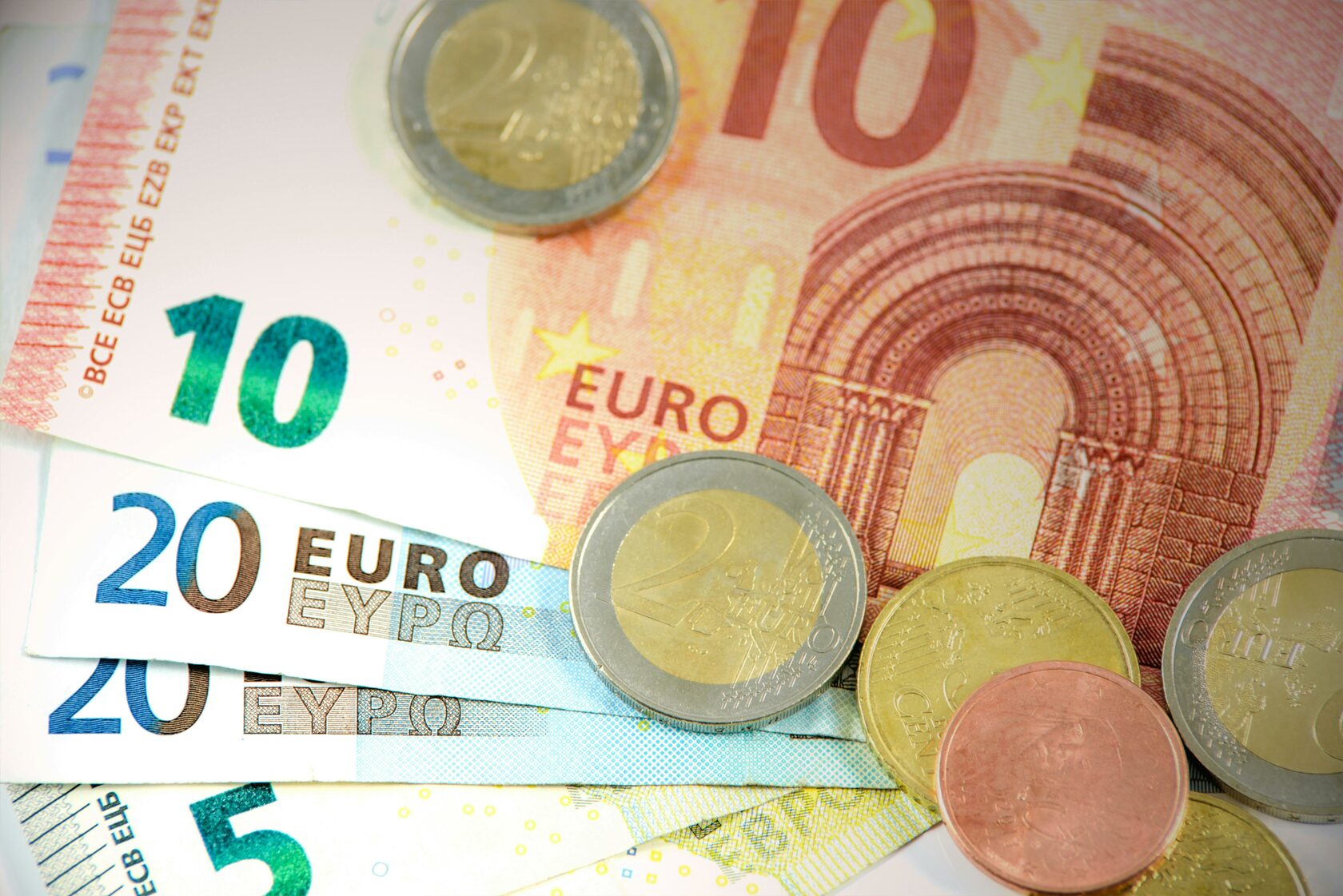
What currency does Germany use?
Germany uses the euro as its official currency, with each euro subdivided into 100 cents.
Euro banknotes are available in denominations of 5, 10, 20, 50, 100, 200, and 500, although the 200 and 500 euro notes are rarely encountered. Additionally, there are 1 and 2 euro coins in circulation.
Cents are represented by coins in values of 1, 2, 5, 10, 20, and 50.
Euro banknotes are available in denominations of 5, 10, 20, 50, 100, 200, and 500, although the 200 and 500 euro notes are rarely encountered. Additionally, there are 1 and 2 euro coins in circulation.
Cents are represented by coins in values of 1, 2, 5, 10, 20, and 50.
Currency of Germany: name, code, symbol
- Name: Euro
- Code: EUR
- Symbol: €
Germany's currency before euro
The Deutsche Mark, the official currency of West Germany from 1948 to 1990 and later the unified Germany until the adoption of the euro in 2002, played a significant role in the country's economic history. Introduced in 1948 to replace the Reichsmark under Allied occupation, it became the official currency of the Federal Republic of Germany upon its establishment in 1949.
On December 31, 1998, the exchange rate for the Deutsche Mark to the euro was fixed at DM 1.95583 = €1 by the Council of the European Union, and the euro was officially introduced on January 1, 1999. Although coins and banknotes in Deutsche Marks remained in circulation and were defined in terms of euros until January 1, 2002, they ceased to be legal tender immediately upon the introduction of the euro. Unlike some other eurozone countries, where legacy currencies coexisted with the euro for a transitional period, the Deutsche Mark was no longer accepted as legal tender from that point.
The Deutsche Bundesbank guaranteed the indefinite exchange of Deutsche Marks into euros, allowing individuals to convert their cash holdings at any branch of the Bundesbank in Germany or even by mail. Despite estimates suggesting that billions of marks were still in circulation in 2012, and some polls indicating support for the currency's restoration, newer surveys revealed that only a minority of Germans favored a reintroduction of the Deutsche Mark.
On December 31, 1998, the exchange rate for the Deutsche Mark to the euro was fixed at DM 1.95583 = €1 by the Council of the European Union, and the euro was officially introduced on January 1, 1999. Although coins and banknotes in Deutsche Marks remained in circulation and were defined in terms of euros until January 1, 2002, they ceased to be legal tender immediately upon the introduction of the euro. Unlike some other eurozone countries, where legacy currencies coexisted with the euro for a transitional period, the Deutsche Mark was no longer accepted as legal tender from that point.
The Deutsche Bundesbank guaranteed the indefinite exchange of Deutsche Marks into euros, allowing individuals to convert their cash holdings at any branch of the Bundesbank in Germany or even by mail. Despite estimates suggesting that billions of marks were still in circulation in 2012, and some polls indicating support for the currency's restoration, newer surveys revealed that only a minority of Germans favored a reintroduction of the Deutsche Mark.
Currency in Germany: history
The history of currency in Germany has undergone significant changes, marked by various monetary systems and transitions. Here is an overview of the key points in the currency history of Germany:
- Reichsmark (1924-1948): After the hyperinflation of the early 1920s in Germany, the Reichsmark was introduced in 1924 to replace the Papiermark. It remained the official currency during the Nazi era until the end of World War II.
- Occupation Currency (1945-1948): In the immediate post-World War II period, Allied military authorities issued occupation currency for use in the various occupation zones. Different zones had distinct currencies, including the Deutsche Mark (DM) in the western zones.
- Deutsche Mark (1948-2002): The Deutsche Mark was introduced in West Germany in 1948 during the post-war reconstruction. It replaced the occupation currency and played a crucial role in the economic success of West Germany. In 1990, following German reunification, the Deutsche Mark became the official currency of the unified Germany. However, with the advent of the euro, the Deutsche Mark ceased to be legal tender on January 1, 2002.
- Euro (2002-present): On January 1, 2002, Germany, along with many other European countries, adopted the euro as its official currency. The euro was introduced in electronic form for banking transactions in 1999. Euro banknotes and coins were introduced for public use in 2002. Since then, the euro has been the sole legal tender in Germany.
Cryptocurrency regulation in Germany
Germany categorizes cryptocurrencies as financial instruments or assets, bringing them under the purview of laws pertaining to securities, commodities, and investments. The country has taken a proactive stance in regulating cryptocurrencies, passing a law in 2020 that requires all cryptocurrency exchanges operating in Germany to be licensed by the Federal Financial Supervisory Authority (BaFin).
BaFin plays a crucial role in the German crypto landscape by supervising and regulating its markets, including entities such as cryptocurrency exchanges, brokers, and custodians.
BaFin plays a crucial role in the German crypto landscape by supervising and regulating its markets, including entities such as cryptocurrency exchanges, brokers, and custodians.