
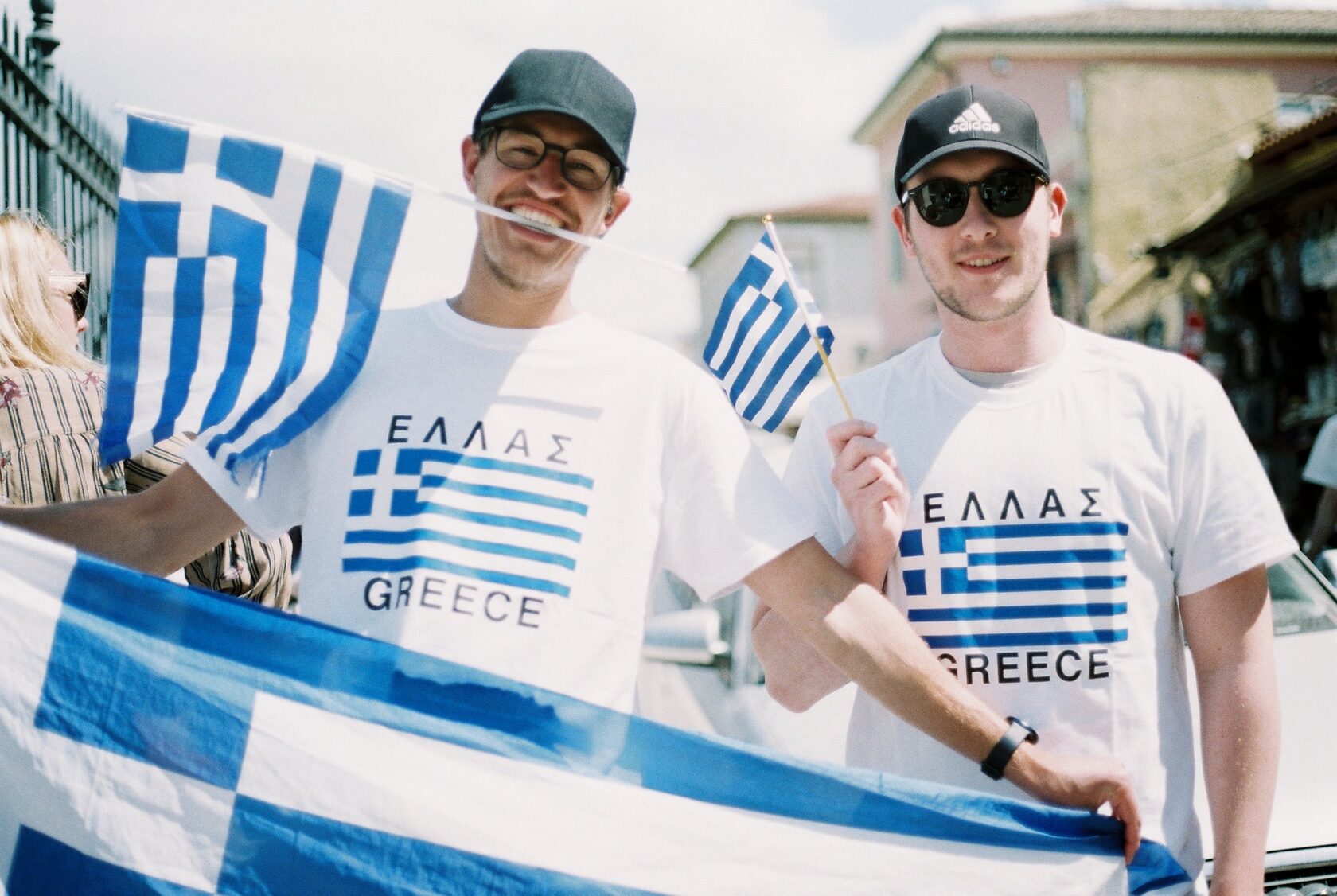
What language do they speak in Greece?
Greek is the official language in Greece, spoken by 99% of the population. Alongside various non-official minority languages and Greek dialects, Greeks commonly learn foreign languages such as English, German, French, and Italian.
What is the Greek language?
‘Greek constitutes an independent branch within the Indo-European language family, spoken natively in regions including Greece, Cyprus, Italy (Calabria and Salento), southern Albania, the Balkans, Black Sea coast, Asia Minor, and the Eastern Mediterranean. With a documented history exceeding 3,400 years, Greek utilizes the Greek alphabet, which has been in use for around 2,800 years. Initially recorded in scripts like Linear B and the Cypriot syllabary, the Greek alphabet evolved from the Phoenician script and served as the foundation for various writing systems, including Latin, Cyrillic, Coptic, Gothic, and others.
Why Greece language same as Russian?
Greek and Russian, both belonging to the Indo-European language family, share distant similarities in certain basic words like "mother," "night," and "tree." Additionally, numerous Greek-based loanwords exist in various European languages, including Russian. The Cyrillic alphabet, derived from the Greek alphabet, features roughly half of its letters with a similar foundation. However, despite these connections, Greek and Russian are fundamentally non-mutually intelligible languages.
Language of Greece: history and facts
The Greek language has roots in the Balkan peninsula dating back to approximately the 3rd millennium BC, possibly even earlier. The earliest written evidence, a Linear B clay tablet found in Messenia dating between 1450 and 1350 BC, establishes Greek as the world's oldest recorded living language. The language has evolved through distinct periods:
1. Proto-Greek: The assumed last ancestor of all known Greek varieties, ending as Hellenic migrants entered the Greek peninsula in the Neolithic or Bronze Age.
2. Mycenaean Greek: The language of the Mycenaean civilization, recorded in the Linear B script from the 15th century BC onwards.
3. Ancient Greek: Various dialects during the Archaic and Classical periods, known throughout the Roman Empire and surviving in the Byzantine world.
4. Koine Greek: A common dialect resulting from the fusion of Ionian with Attic, serving as a lingua franca from the Eastern Mediterranean to the Near East.
5. Medieval Greek (Byzantine Greek): The continuation of Koine Greek until the 15th century, encompassing a continuum of styles.
6. Modern Greek (Neo-Hellenic): Stemming from Medieval Greek, used by modern Greeks with multiple dialects.
In the modern era, Greek experienced diglossia, coexisting vernacular and archaizing written forms. The Greek language question involved a polarization between Dimotiki (vernacular) and Katharevousa (purified), leading to the adoption of Dimotiki as the official language in 1976, giving rise to Standard Modern Greek used today for official purposes and education.
The historical unity of the Greek language emphasizes continuity across its various stages, with cultural, literary, and orthographic traditions persisting. Despite morphological and phonological changes, Greek speakers still connect with ancient Greek literary works, considering them part of their own cultural heritage. The language's historical changes are deemed relatively modest compared to some other languages.
Some facts:
1. Approximately 13 million people speak Greek as their native language, primarily in Greece and Cyprus, but also in Italy, Albania, and Turkey. The Greek diaspora, residing in Western Europe, Canada, the United States, Argentina, Australia, Brazil, and other nations, actively uses Greek in daily life.
2. Greek has exerted a significant influence on Western literature and various fields such as mathematics, astronomy, and philosophy. Numerous English words in these domains have Greek origins, and alongside Latin, Greek continues to contribute to the formation of new words in English and other languages.
3. The lengthiest Ancient Greek word, transliterated into English as Lopadotemachoselachogaleokranioleipsanodrimhypotrimmatosilphioparaomelitokatakechymenokichlepikossyphophattoperisteralektryonoptekephalliokigklopeleiolagoiosiraiobaphetraganopterygon, comprises 182 characters. This fictional term, representing a dish, was created by Aristophanes in his comedy "Assemblywomen."
1. Proto-Greek: The assumed last ancestor of all known Greek varieties, ending as Hellenic migrants entered the Greek peninsula in the Neolithic or Bronze Age.
2. Mycenaean Greek: The language of the Mycenaean civilization, recorded in the Linear B script from the 15th century BC onwards.
3. Ancient Greek: Various dialects during the Archaic and Classical periods, known throughout the Roman Empire and surviving in the Byzantine world.
4. Koine Greek: A common dialect resulting from the fusion of Ionian with Attic, serving as a lingua franca from the Eastern Mediterranean to the Near East.
5. Medieval Greek (Byzantine Greek): The continuation of Koine Greek until the 15th century, encompassing a continuum of styles.
6. Modern Greek (Neo-Hellenic): Stemming from Medieval Greek, used by modern Greeks with multiple dialects.
In the modern era, Greek experienced diglossia, coexisting vernacular and archaizing written forms. The Greek language question involved a polarization between Dimotiki (vernacular) and Katharevousa (purified), leading to the adoption of Dimotiki as the official language in 1976, giving rise to Standard Modern Greek used today for official purposes and education.
The historical unity of the Greek language emphasizes continuity across its various stages, with cultural, literary, and orthographic traditions persisting. Despite morphological and phonological changes, Greek speakers still connect with ancient Greek literary works, considering them part of their own cultural heritage. The language's historical changes are deemed relatively modest compared to some other languages.
Some facts:
1. Approximately 13 million people speak Greek as their native language, primarily in Greece and Cyprus, but also in Italy, Albania, and Turkey. The Greek diaspora, residing in Western Europe, Canada, the United States, Argentina, Australia, Brazil, and other nations, actively uses Greek in daily life.
2. Greek has exerted a significant influence on Western literature and various fields such as mathematics, astronomy, and philosophy. Numerous English words in these domains have Greek origins, and alongside Latin, Greek continues to contribute to the formation of new words in English and other languages.
3. The lengthiest Ancient Greek word, transliterated into English as Lopadotemachoselachogaleokranioleipsanodrimhypotrimmatosilphioparaomelitokatakechymenokichlepikossyphophattoperisteralektryonoptekephalliokigklopeleiolagoiosiraiobaphetraganopterygon, comprises 182 characters. This fictional term, representing a dish, was created by Aristophanes in his comedy "Assemblywomen."
Can I speak English in Greece?
English is commonly spoken in Greece, particularly in tourist hubs and among the younger population. Many Greeks, particularly those in the tourism sector, are proficient in English. Nevertheless, English proficiency might differ outside these regions, emphasizing the value of learning basic Greek phrases to enhance communication.
Can I speak Russian in Greece?
Russian has gained significant prominence in Greece, particularly in Greek Macedonia and other parts of Northern Greece. This is attributed to affluent Russians who have established residency in Greece and Russian-speaking economic migrants who arrived during the 1990s. Furthermore, Russian serves as a second or third language for many Georgians and Pontic Greeks originating from Georgia, Ukraine, and Russia, who settled in Greece in substantial numbers during the same period. The older generation of Caucasus Greeks, primarily settled in Salonika, Kilkis, and other areas in Central Macedonia around 1920, also speak Russian as a second language. Similarly, Greeks who resettled in Czechoslovakia, the USSR, and other Eastern Bloc states after the Greek Civil War and returned to Greece mainly in the early 1990s are conversant in Russian.