
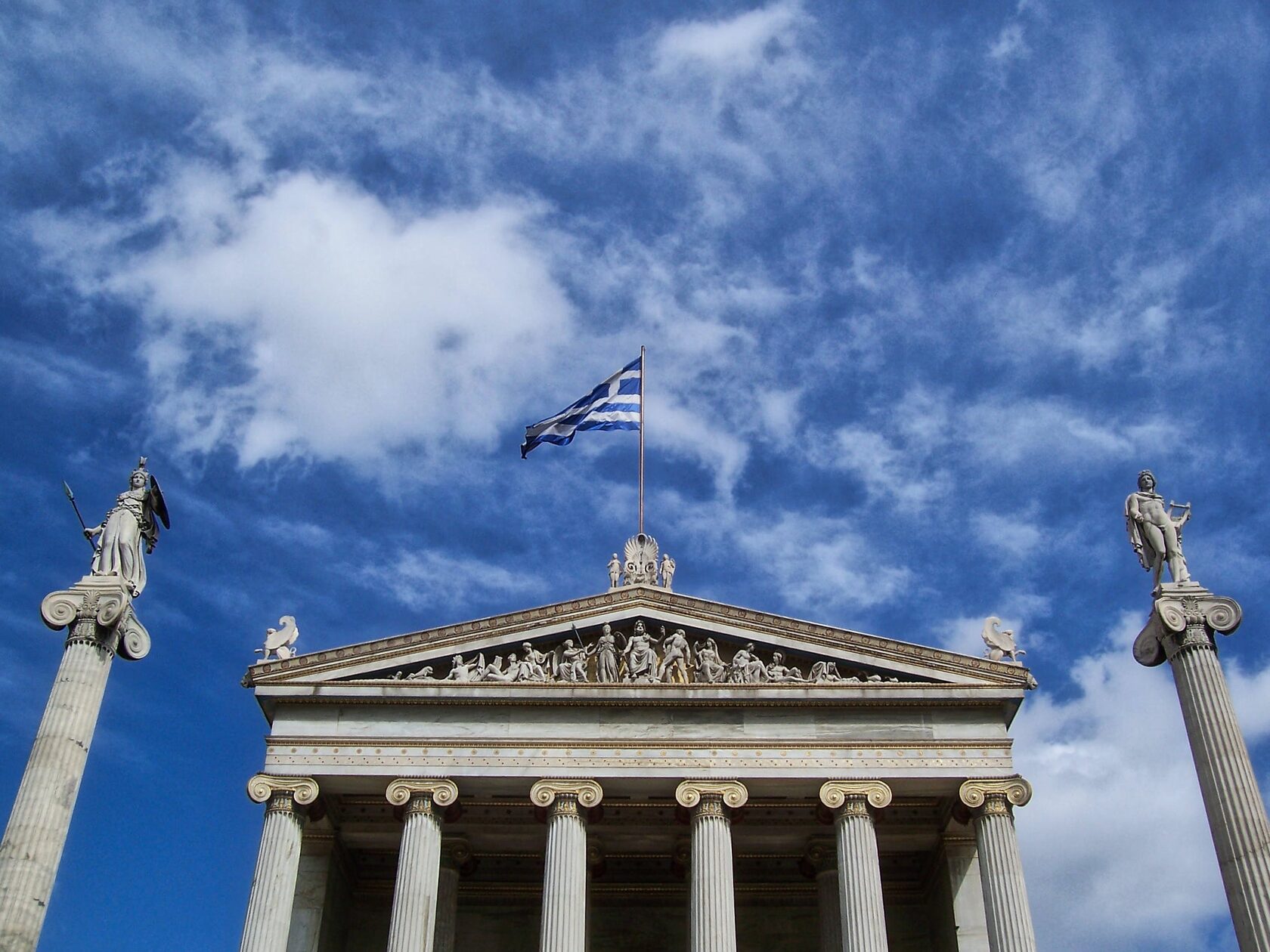
What is the capital of Greece?
Athens, the capital and largest city of Greece, holds sway over the Attica region and stands as one of the world's ancient cities, with a documented history spanning approximately 3,400 years. Classical Athens, originally landlocked, flourished as a powerful city-state in tandem with the maritime expansion of the port of Piraeus. Renowned for its contributions to the arts, learning, and philosophy, hosting Plato's Academy and Aristotle's Lyceum, Athens is often hailed as the cradle of Western civilization and the birthplace of democracy. Its cultural and political achievements during the 5th and 4th centuries BC left an indelible mark on the European continent. In the present day, modern Athens is a cosmopolitan metropolis playing a pivotal role in Greece's economic, financial, industrial, political, and cultural spheres.
Is Athens the capital of Greece now? Why?
Yes, Athens is currently the capital of Greece. The choice of Athens as the capital is rooted in historical, cultural, and political significance. It has been the capital since the establishment of the modern Greek state in 1834. Athens has played a central role in Greek history, serving as the heart of ancient Greek civilization.
What was the capital of old Greece?
The capital of ancient Greece was not a fixed city like modern capitals but rather varied throughout different periods. However, Athens is often considered the most significant and influential city-state in ancient Greece. During the Classical period, Athens emerged as a major cultural, political, and economic center. It was the birthplace of democracy and the site of renowned philosophical schools, including Plato's Academy and Aristotle's Lyceum. Other notable city-states in ancient Greece included Sparta, Corinth, and Thebes, each with its own prominence at different points in history.
Was Thebes the capital of Greece?
In the contemporary Greek state, Thebes served as the capital of the prefecture of Boeotia until the late 19th century, when Livadeia assumed the role of the capital.
Today, Thebes thrives as a vibrant market town, renowned for its diverse array of products and merchandise. In the past, it boasted a flourishing agrarian sector alongside some industrial complexes until the late 1980s and 1990s, when much of the industry migrated southward, closer to Athens. Tourism in the region predominantly centers around Thebes and nearby villages, hosting various ancient sites such as the battlefield of the Battle of Plataea. Despite its proximity to more renowned destinations like Athens and Chalkis, and the presence of underdeveloped archaeological sites, tourist numbers remain relatively low. Notably, a significant portion of Thebes' population comprises Arvanites.
Today, Thebes thrives as a vibrant market town, renowned for its diverse array of products and merchandise. In the past, it boasted a flourishing agrarian sector alongside some industrial complexes until the late 1980s and 1990s, when much of the industry migrated southward, closer to Athens. Tourism in the region predominantly centers around Thebes and nearby villages, hosting various ancient sites such as the battlefield of the Battle of Plataea. Despite its proximity to more renowned destinations like Athens and Chalkis, and the presence of underdeveloped archaeological sites, tourist numbers remain relatively low. Notably, a significant portion of Thebes' population comprises Arvanites.