
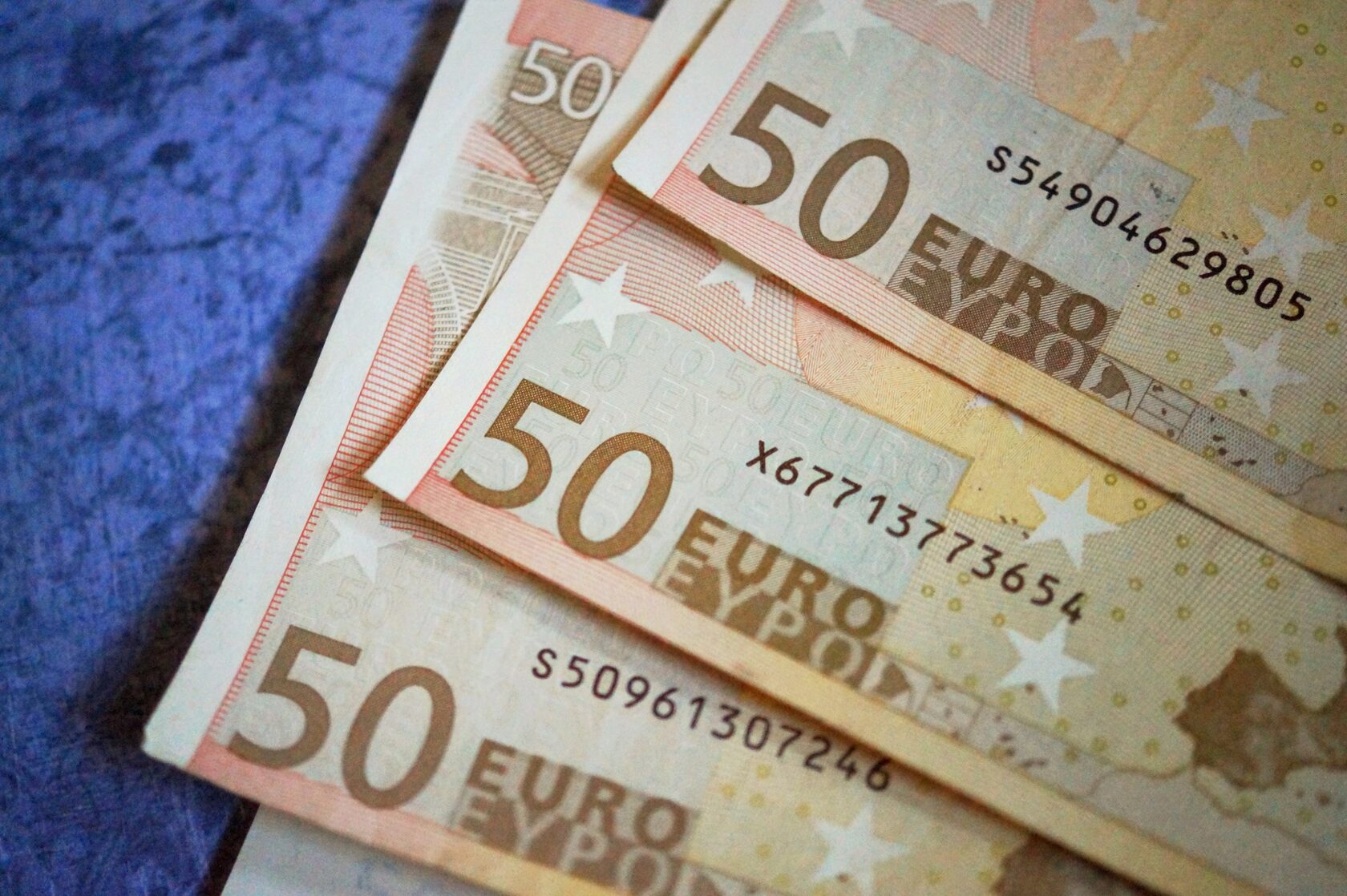
What currency does Greece use?
Greece's official currency is the euro, and it is subdivided into 100 cents.
Euro banknotes are available in denominations of 5, 10, 20, 50, 100, 200, and 500, although the 200 and 500 EUR notes are infrequently used. Additionally, there are 1 and 2 euro coins.
Cents are represented by coins in values of 1, 2, 5, 10, 20, and 50.
Euro banknotes are available in denominations of 5, 10, 20, 50, 100, 200, and 500, although the 200 and 500 EUR notes are infrequently used. Additionally, there are 1 and 2 euro coins.
Cents are represented by coins in values of 1, 2, 5, 10, 20, and 50.
Currency of Greece: name, code, symbol
The currency of Greece is the Euro (EUR), with the symbol € and the code EUR.
Does Greece use the euro? Why?
Yes. The decision to use the euro was part of Greece's broader integration into the European Union (EU) and the Eurozone. The adoption of a common currency was seen as a means to facilitate economic cooperation, trade, and stability among EU member countries. While the euro has provided benefits in terms of financial integration and easier cross-border transactions, Greece has faced economic challenges within the Eurozone, particularly during the financial crisis in the late 2000s.
Greece's currency before euro
The drachma, an ancient Greek silver coin dating back to approximately the mid-6th century BC, served as the former monetary unit of modern Greece. Its name originates from the Greek verb meaning "to grasp," and its initial value was based on a handful of arrows. Early drachma coins varied in weight across different regions. By the 5th century BC, Athens rose to commercial prominence, making the Athenian drachma the predominant currency. One drachma equaled 6 oboli; 100 drachmas equaled 1 mine; and 60 mine equaled 1 Attic talent.
Following Alexander the Great's conquests, the Athenian drachma became the standard currency in the Hellenistic world. Over time, silver drachma coins and their multiples underwent debasement, incorporating higher proportions of copper. The drachma also served as the model for an Islamic coin—the dirham. However, with foreign invasions in Greece, the drachma fell out of use.
Upon Greece's independence from the Ottoman Empire in 1828, the phoenix was briefly introduced as the monetary unit. In 1832, the phoenix was replaced by the drachma, featuring the image of King Otto, the first monarch of modern Greece (reigning from 1832 to 1862). The drachma was subdivided into 100 lepta.
Following Alexander the Great's conquests, the Athenian drachma became the standard currency in the Hellenistic world. Over time, silver drachma coins and their multiples underwent debasement, incorporating higher proportions of copper. The drachma also served as the model for an Islamic coin—the dirham. However, with foreign invasions in Greece, the drachma fell out of use.
Upon Greece's independence from the Ottoman Empire in 1828, the phoenix was briefly introduced as the monetary unit. In 1832, the phoenix was replaced by the drachma, featuring the image of King Otto, the first monarch of modern Greece (reigning from 1832 to 1862). The drachma was subdivided into 100 lepta.
When did Greece currency change?
Greece became a member of the European Union in 1981 and embraced the euro as its official currency in 2001, positioning itself as one of the initial countries to introduce euro banknotes and coins on January 1, 2002.
Does Greece take US currency?
Businesses in Greece do not acknowledge U.S. dollars for transactions. It's essential to use Greek currency for cash transactions within the country. While some establishments, like hotels, may accept physical U.S. dollars, doing so might incur unfavorable exchange rates or extra fees.