
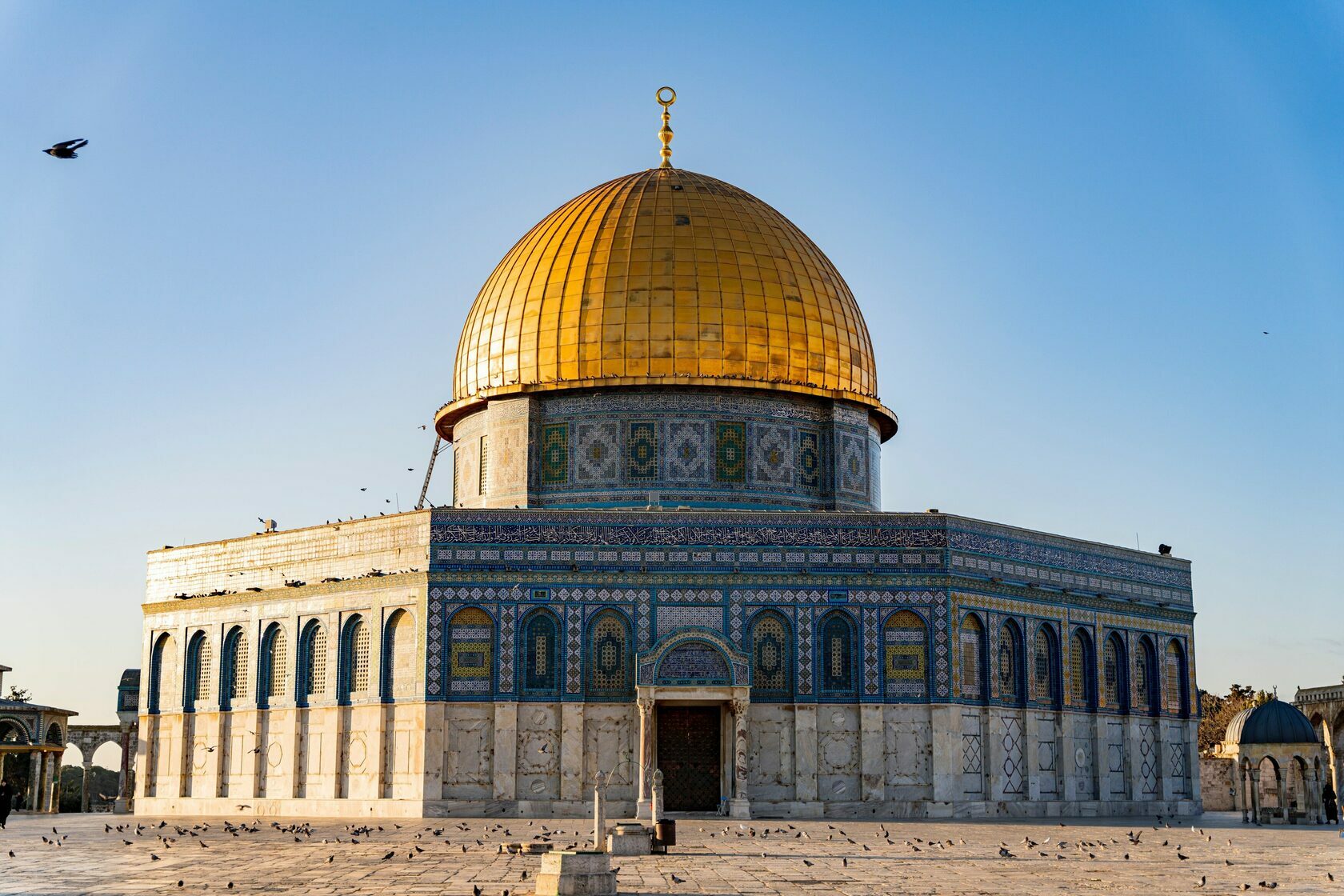
Join us as we uncover the fascinating details about the capital of Israel. Let's delve into the history, significance, and unique aspects that make this city the heart of the nation
What is the capital of Israel?
The capital of Israel is Jerusalem.
When did Jerusalem became the capital of Israel?
Upon the establishment of the State of Israel in 1948, Jerusalem regained its status as the capital of a sovereign Jewish state. Over the course of its existence spanning millennia, Jerusalem has exclusively served as the capital and has never held this role for any other sovereign nation.
Who made Jerusalem the capital of Israel?
The establishment of Jerusalem as the capital of Israel dates back to the declaration of the State of Israel on May 14, 1948. This decision was made by the Israeli government at the time, following the United Nations' approval of the partition plan for Palestine. The plan designated Jerusalem as a separate entity under international administration due to its significance to multiple religious and ethnic groups. However, after Israel declared independence, it asserted Jerusalem as its capital, a move that has been a subject of international debate and conflict.
What was the capital of Israel before Jerusalem?
Jerusalem serves as the capital of Israel and has held this status since the country's establishment. The choice of a capital is a sovereign decision made by the nation itself, and in the case of Israel, Jerusalem has been recognized as its capital since the time of King David.
First capital city of Israel after division into Israel and Judah
In the early history of Israel, the capital city underwent several changes. Initially, it was Shechem, later transitioning to Penuel (verse 25), and subsequently Tirzah (as noted in 1 Kings 15:21). King Baasa had initially considered fortifying Ramah but ultimately chose Tirzah. Around 885 B.C.E., the throne was temporarily seized by Zimri, a chariot captain, as recounted in 1 Kings 16:9-12. However, Zimri's reign lasted only seven days before Omri, an army captain, laid siege to Tirzah and claimed the throne (verses 16-19). This coup d'etat marked the beginning of a four-year civil war.