
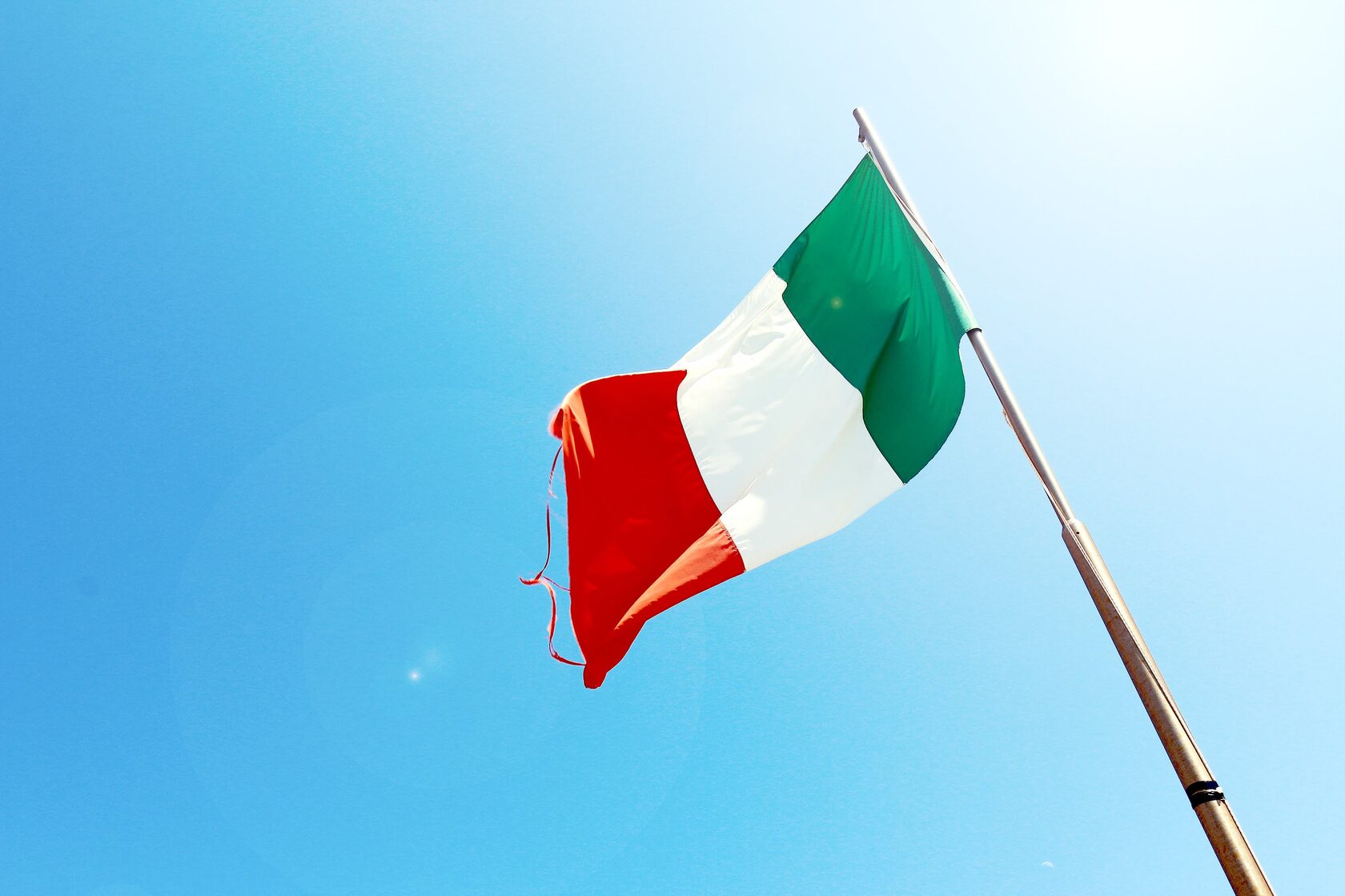
Today, let's delve into the linguistic tapestry of Italy as we explore the intricacies of the Italian language.
Language of Italy: history and facts
The history of the Italian language is deeply intertwined with the history of Italy itself. During the Roman Empire, Latin was the dominant language in the region. However, as the Roman Empire declined, various Germanic and other barbarian invasions led to linguistic changes. Over time, Latin evolved into regional dialects, forming the basis for the modern Romance languages.
In the Middle Ages, a literary language known as "volgare" emerged from these dialects, becoming the precursor to the Italian language. The renowned poet Dante Alighieri played a significant role in shaping the language during the 13th and 14th centuries through his masterpiece, "The Divine Comedy," written in Tuscan dialect. This Tuscan dialect eventually became the standard form of the Italian language.
Italian unification in the 19th century further solidified the standardization process. The government promoted the use of a unified Italian language to foster a sense of national identity among diverse regions.
Some facts:
Italian stands out as one of the languages closest to Latin, owing to its historical roots. As the official language of the Roman Empire, Latin left a profound impact on the Italian language. Following the empire's dissolution in the 6th century, vulgar versions of Latin gradually evolved into the Romance languages, with Italian being a prominent descendant. Additionally, Latin remains the official language of the Catholic Church and Vatican City.
In everyday language use, some Italian words find their way into English but may be misused. For example, the term 'panini' in English refers to a type of sandwich, yet in Italian, it denotes more than one sandwich or bread roll. Consequently, using "a panini" for a single sandwich may sound peculiar to native Italian speakers.
Italian is spoken by approximately 66 million people worldwide, with around 63 million using it as their primary language and an additional 3 million as a second language. Remarkably, Italian ranks around the 20th most-spoken language globally and is the fourth most studied language worldwide, highlighting its cultural and educational significance.
The word 'volt' has Italian origins, attributed to the renowned Italian scientist and inventor Alessandro Volta. In 1799, Volta made a groundbreaking contribution by creating the Voltaic pile, a device generating electric current. The unit of electrical measurement, 'volt,' is derived from his last name, underscoring Italy's influential contributions beyond the realm of language.
In the Middle Ages, a literary language known as "volgare" emerged from these dialects, becoming the precursor to the Italian language. The renowned poet Dante Alighieri played a significant role in shaping the language during the 13th and 14th centuries through his masterpiece, "The Divine Comedy," written in Tuscan dialect. This Tuscan dialect eventually became the standard form of the Italian language.
Italian unification in the 19th century further solidified the standardization process. The government promoted the use of a unified Italian language to foster a sense of national identity among diverse regions.
Some facts:
Italian stands out as one of the languages closest to Latin, owing to its historical roots. As the official language of the Roman Empire, Latin left a profound impact on the Italian language. Following the empire's dissolution in the 6th century, vulgar versions of Latin gradually evolved into the Romance languages, with Italian being a prominent descendant. Additionally, Latin remains the official language of the Catholic Church and Vatican City.
In everyday language use, some Italian words find their way into English but may be misused. For example, the term 'panini' in English refers to a type of sandwich, yet in Italian, it denotes more than one sandwich or bread roll. Consequently, using "a panini" for a single sandwich may sound peculiar to native Italian speakers.
Italian is spoken by approximately 66 million people worldwide, with around 63 million using it as their primary language and an additional 3 million as a second language. Remarkably, Italian ranks around the 20th most-spoken language globally and is the fourth most studied language worldwide, highlighting its cultural and educational significance.
The word 'volt' has Italian origins, attributed to the renowned Italian scientist and inventor Alessandro Volta. In 1799, Volta made a groundbreaking contribution by creating the Voltaic pile, a device generating electric current. The unit of electrical measurement, 'volt,' is derived from his last name, underscoring Italy's influential contributions beyond the realm of language.
How many languages are spoken in Italy?
The nation is home to approximately 34 spoken languages and their associated dialects. Predominantly, these languages are rooted in Romance, having evolved from Vulgar Latin. Examples of these Romance-based languages encompass Sicilian, Neapolitan, Sardinian, and several others.
What language is spoken in Italy?
Italian, a Romance language within the Indo-European language family, traces its roots back to Vulgar Latin from the Roman Empire. Alongside Sardinian, it stands out as the least divergent Romance language from Latin. Approximately 85 million people speak Italian, and it holds official language status in Italy, San Marino, and Switzerland (specifically, Ticino and the Grisons), while also being the primary language in Vatican City. Additionally, it enjoys official minority status in Croatia and certain areas of Slovenian Istria.
Paola, a speaker of both Italian and Sicilian, was recorded in Italy. Beyond its native speakers, Italian is spoken by substantial immigrant and expatriate communities in the Americas and Australia. Although not a co-official or protected language in Bosnia and Herzegovina and Romania, Italian is covered by the European Charter for Regional or Minority Languages in these regions. Some Italian speakers are native bilinguals, proficient in both the standard form and regional varieties, along with a local language from their place of origin.
As a major European language, Italian holds official language status in the Organization for Security and Co-operation in Europe and serves as one of the working languages in the Council of Europe. Within the European Union, it ranks as the second-most-widely spoken native language, with 67 million speakers, constituting 15% of the EU population. An additional 13.4 million EU citizens speak Italian as a second language (3%). Including speakers outside the EU in countries like Switzerland, Albania, and the United Kingdom, as well as on other continents, the total number of Italian speakers is approximately 85 million.
Italian assumes a crucial role as the main working language of the Holy See, acting as the lingua franca in the Roman Catholic hierarchy and serving as the official language of the Sovereign Military Order of Malta. It has significant relevance in musical terminology and opera, contributing numerous words that have become international terms adopted into various languages globally. Italian's distinctive linguistic features include almost all native words ending with vowels and a 7-vowel sound system, wherein 'e' and 'o' exhibit mid-low and mid-high sounds. The language also features a contrast between short and long consonants, along with the phenomenon of gemination (doubling) of consonants.
Paola, a speaker of both Italian and Sicilian, was recorded in Italy. Beyond its native speakers, Italian is spoken by substantial immigrant and expatriate communities in the Americas and Australia. Although not a co-official or protected language in Bosnia and Herzegovina and Romania, Italian is covered by the European Charter for Regional or Minority Languages in these regions. Some Italian speakers are native bilinguals, proficient in both the standard form and regional varieties, along with a local language from their place of origin.
As a major European language, Italian holds official language status in the Organization for Security and Co-operation in Europe and serves as one of the working languages in the Council of Europe. Within the European Union, it ranks as the second-most-widely spoken native language, with 67 million speakers, constituting 15% of the EU population. An additional 13.4 million EU citizens speak Italian as a second language (3%). Including speakers outside the EU in countries like Switzerland, Albania, and the United Kingdom, as well as on other continents, the total number of Italian speakers is approximately 85 million.
Italian assumes a crucial role as the main working language of the Holy See, acting as the lingua franca in the Roman Catholic hierarchy and serving as the official language of the Sovereign Military Order of Malta. It has significant relevance in musical terminology and opera, contributing numerous words that have become international terms adopted into various languages globally. Italian's distinctive linguistic features include almost all native words ending with vowels and a 7-vowel sound system, wherein 'e' and 'o' exhibit mid-low and mid-high sounds. The language also features a contrast between short and long consonants, along with the phenomenon of gemination (doubling) of consonants.
Is English spoken in Italy?
While English might be spoken by some employees in tourist areas, the average Italian does not speak the language fluently. Even if they do, their proficiency may be limited and challenging to comprehend. In high schools, there are only a few options that focus on learning English, and those who choose these paths may end up with a basic ESL (English as a Second Language) level if they don't continue learning the language.
For visitors, it is advisable to learn a few basic Italian words to navigate situations like asking for directions or inquiring about prices in small shops. Using common phrases such as 'permesso' or 'scusate' to request passage will likely be more effective than using 'excuse me.' Additionally, learning some of the local language is considered polite when in another country.
For individuals planning to move to Italy, there are often free Italian classes available in libraries and other centers, especially in cities like Rome. Although Italian is a challenging language to master, the effort is worthwhile, particularly as proficiency in English diminishes outside of tourist zones. Overall, it's beneficial to have some knowledge of Italian for better communication and cultural integration.
For visitors, it is advisable to learn a few basic Italian words to navigate situations like asking for directions or inquiring about prices in small shops. Using common phrases such as 'permesso' or 'scusate' to request passage will likely be more effective than using 'excuse me.' Additionally, learning some of the local language is considered polite when in another country.
For individuals planning to move to Italy, there are often free Italian classes available in libraries and other centers, especially in cities like Rome. Although Italian is a challenging language to master, the effort is worthwhile, particularly as proficiency in English diminishes outside of tourist zones. Overall, it's beneficial to have some knowledge of Italian for better communication and cultural integration.
Italy ban English language?
Proposed by Prime Minister Georgia Meloni's Brothers of Italy party, new legislation seeks to impose fines of up to €100,000 (approximately $109,000) on Italians using English words in official communications. The legislation, targeting all foreign languages but particularly emphasizing English, asserts that such language usage "demeans and mortifies" the Italian language. Drafted by Fabio Rampelli, a member of the lower chamber of deputies, the proposal argues that the use of English is even more offensive since the United Kingdom is no longer part of the European Union.
Comprising two articles, the legislation's first article specifies that Italian must be the primary language even in offices dealing with non-Italian-speaking foreigners. The second article aims to make Italian mandatory for promoting public goods and services within the national territory. Violating these proposed rules could result in fines ranging from €5,000 (approximately $5,435) to €100,000 (roughly $109,000).
Comprising two articles, the legislation's first article specifies that Italian must be the primary language even in offices dealing with non-Italian-speaking foreigners. The second article aims to make Italian mandatory for promoting public goods and services within the national territory. Violating these proposed rules could result in fines ranging from €5,000 (approximately $5,435) to €100,000 (roughly $109,000).