
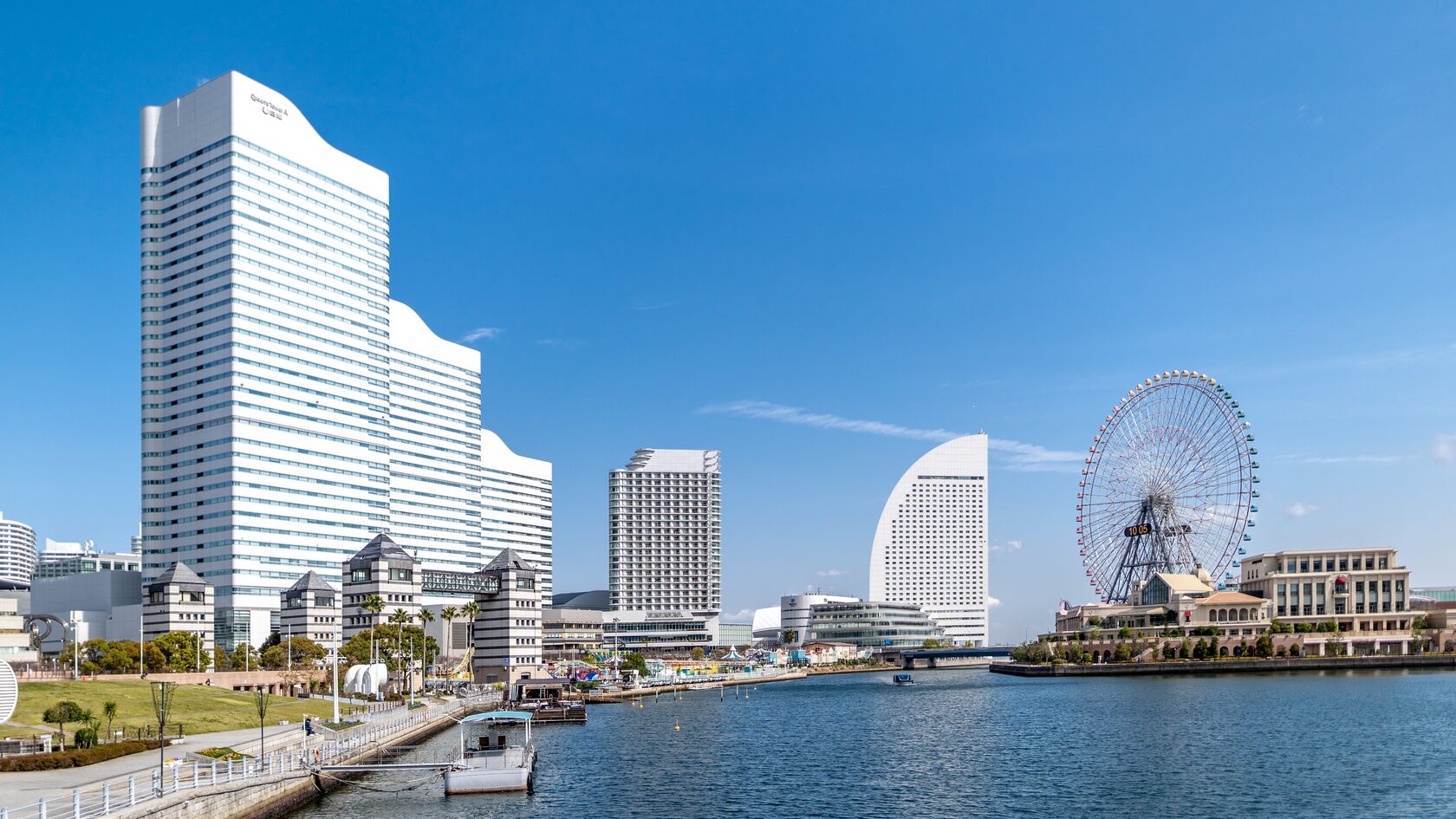
Japan's economy stands as a dynamic powerhouse, blending technological innovation with traditional craftsmanship. Renowned for its resilience, the Japanese economic landscape is marked by a unique fusion of modern industrial prowess and cultural heritage.
Does Japan have a good economy?
Japan boasts a sophisticated social market economy, recognized as an East Asian model for its advanced development. Japan holds membership in prominent international forums such as the G7 and G20.
Is Japan the third-largest economy?
Yes. The third-largest global economy, Japan, is undergoing a transformative resurgence after decades of economic stagnation. In a departure from years of deflation or minimal inflation, Japan is experiencing its most rapid price growth in over 30 years, accompanied by a notable increase in wages, a phenomenon unseen since the 1990s. These shifts, predominantly attributed to global supply shocks, are not the sole factors at play.
What is the economy of Japan in 2023?
Japan's government revised upward its economic growth forecasts for the current fiscal year in its semi-annual economic outlook. The real economic growth rate for fiscal 2023/24 is now projected at 1.6%, a slight increase from the previous estimate of 1.3%. This adjustment is attributed to the anticipation that external demand will play a significant role in offsetting subdued domestic consumption. External demand, fueled by a rebound in inbound tourism and increased automobile output, is expected to contribute 1.4 percentage points to the overall growth.
Japan bubble economy
In the late 1980s, Japan faced a colossal asset price bubble within its economy. This bubble was a consequence of the Bank of Japan imposing extensive loan growth quotas on banks through a policy tool known as "window guidance." Economist Paul Krugman elucidated that Japanese banks, with less concern for borrower quality, engaged in excessive lending, contributing significantly to the inflation of the bubble economy. Economist Richard Werner contends that external factors like the Plaza Accord and the Ministry of Finance's discount rate reduction policy alone are inadequate in comprehensively explaining the Bank of Japan's actions during this period.
Japan airlines economy
Japan Airlines' economic landscape encompasses various facets, including financial performance, operational efficiency, and strategic management. As a prominent player in the Japanese aviation sector, JAL actively engages with global market trends, striving for sustainable growth within the aviation industry.
Economy of Japan: growth rate
Japan's economic growth is forecasted to reach 1.1% in 2022, followed by a projected increase to 1.3% in 2023 and a subsequent moderation to 1.0% in 2024.
Argentina vs Japan economy
In a comparison between Argentina and Japan:
Currency:
Unemployment Rate:
Inflation Rate:
Commercial Taxes and Contributions:
Average Income:
Central Government Debt (% of GDP):
Corruption Index:
Currency:
- Argentina uses the Argentine peso (1 ARS = 100 Centavos).
- Japan uses the Japanese yen (1 JPY = 100 Sen).
Unemployment Rate:
- Argentina has an unemployment rate of 6.5%.
- Japan boasts a lower unemployment rate at 2.6%.
Inflation Rate:
- Argentina experiences a high inflation rate of 94.80%.
- Japan maintains a significantly lower inflation rate at 2.50%.
Commercial Taxes and Contributions:
- Argentina faces a relatively high commercial tax and contribution rate of 106.30%.
- Japan maintains a lower commercial tax and contribution rate at 46.70%.
Average Income:
- The average income in Argentina is 11,620 US dollars.
- Japan reports a higher average income at 42,440 US dollars.
Central Government Debt (% of GDP):
- Argentina's central government debt stands at 84.47% of GDP.
- Japan has a higher central government debt, accounting for 214.27% of its GDP.
Corruption Index:
- Argentina is rated 62, indicating a challenging situation regarding corruption.
- Japan receives a lower corruption index of 27, signaling a comparatively better environment in terms of corruption.
Japan vs Germany economy
In a comparative analysis between Germany and Japan:
Currency:
Unemployment Rate:
Inflation Rate:
Cost of Living:
Commercial Taxes and Contributions:
Average Income:
Central Government Debt (% of GDP):
General Government Debt (% of GDP):
Corruption Index:
Currency:
- Germany uses the euro, denoted as 1 EUR = 100 Cent.
- Japan utilizes the Japanese yen, with 1 JPY = 100 Sen.
Unemployment Rate:
- Germany records an unemployment rate of 3.0%.
- Japan reports a slightly lower unemployment rate at 2.6%.
Inflation Rate:
- Germany experiences an inflation rate of 6.87%.
- Japan maintains a lower inflation rate at 2.50%.
Cost of Living:
- The cost of living in Germany is 82.26% (compared to the USA at 100%).
- Japan's cost of living is slightly higher at 84.91%.
Commercial Taxes and Contributions:
- Germany faces a commercial tax and contribution rate of 48.80%.
- Japan maintains a slightly lower commercial tax and contribution rate at 46.70%.
Average Income:
- The average income in Germany is 53,390 US dollars.
- Japan reports a lower average income at 42,440 US dollars.
Central Government Debt (% of GDP):
- Germany's central government debt stands at 45.95% of GDP.
- Japan has a higher central government debt, accounting for 214.27% of its GDP.
General Government Debt (% of GDP):
- Germany's general government debt is 66.54% of GDP.
- Japan reports a higher general government debt, accounting for 261.29% of its GDP.
Corruption Index:
- Germany is rated 21 on the corruption index, indicating a favorable situation.
- Japan receives a slightly higher corruption index of 27, also indicating a good environment regarding corruption.
Japan vs South Korea economy
In a comparative analysis between Japan and South Korea:
Currency:
Unemployment Rate:
Inflation Rate:
Cost of Living:
Commercial Taxes and Contributions:
Average Income:
Central Government Debt (% of GDP):
General Government Debt (% of GDP):
Corruption Index:
Currency:
- Japan uses the Japanese yen, with 1 JPY = 100 Sen.
- South Korea utilizes the South Korean won, with 1 KRW = 100 Chon.
Unemployment Rate:
- Japan records an unemployment rate of 2.6%.
- South Korea reports a slightly higher unemployment rate at 2.8%.
Inflation Rate:
- Japan maintains a lower inflation rate at 2.50%.
- South Korea experiences a higher inflation rate at 5.09%.
Cost of Living:
- The cost of living in Japan is 84.91% (compared to the USA at 100%).
- South Korea's cost of living is comparatively lower at 75.58%.
Commercial Taxes and Contributions:
- Japan faces a commercial tax and contribution rate of 46.70%.
- South Korea maintains a lower commercial tax and contribution rate at 33.20%.
Average Income:
- The average income in Japan is 42,440 US dollars.
- South Korea reports a lower average income at 35,990 US dollars.
Central Government Debt (% of GDP):
- Japan's central government debt stands at 214.27% of GDP.
- South Korea has a lower central government debt, accounting for 48.05% of its GDP.
General Government Debt (% of GDP):
- Japan's general government debt is 261.29% of GDP.
- South Korea reports a lower general government debt, accounting for 54.33% of its GDP.
Corruption Index:
- Japan is rated 27 on the corruption index, indicating a good situation.
- South Korea receives a slightly higher corruption index of 37, classified as moderate.
Japan circular economy
Japan is actively advancing its commitment to a circular economy, characterized by a closed loop of consumption that minimizes waste and avoids the introduction of additional resources. Since the start of 2019, awareness and engagement in circular economy practices in Japan have steadily increased. Notably, Google Trends indicates a sustained interest in circular economy concepts, aligning with the growing awareness of Sustainable Development Goals (SDGs).
The Japanese government has implemented laws and regulations to support the transition towards a circular economy. The Basic Law for Establishing a Sound Material-Cycle Society, enacted in 2000, focuses on moving away from mass production and consumption while guiding waste and recycling development. Additionally, the 4th Plan of Establishing a Circular Society, launched in 2018, emphasizes regional revitalization, full resource life cycle circulation, and proper waste processing or resource regeneration.
Japan's Ministry of the Environment actively collaborates with international bodies, such as the World Economic Forum, to strengthen partnerships for achieving a circular economy. The Circular Economy Challenge, part of the Platform for Accelerating the Circular Economy, recognizes and promotes businesses contributing to circular economy initiatives. The country's Circular Economy Vision 2020 aligns with global efforts to address the climate crisis through the development of digital technologies.
Numerous case studies highlight innovative circular economy practices in Japan. For instance, the ZAURUS smartphone shredding service engages in urban mining, recycling old electronic devices by shredding them and extracting rare metals for reuse. Companies like BRING T-Shirts and FINE Inc.'s "Rename" brand contribute to circularity by repurposing old clothing and addressing waste in the apparel industry. iKasa, Japan's first umbrella-sharing economy, not only reduces waste but also extends product lifecycles through repair services.
Several organizations in Japan actively promote circular economy principles. Circular Economy Japan, Circular Economy Hub, and Circular Yokohama serve as platforms for sharing information, hosting events, and educating the public and businesses on circular economy concepts. The Circular Economy Organization focuses on leveraging technologies like IoT, Big Data, Mobile tech, Cloud tech, and Artificial Intelligence to revolutionize various industries. The Kanagawa Upcycle Consortium aims to become a leading model of a circular economy globally by promoting its upcycling model.
The Japanese government has implemented laws and regulations to support the transition towards a circular economy. The Basic Law for Establishing a Sound Material-Cycle Society, enacted in 2000, focuses on moving away from mass production and consumption while guiding waste and recycling development. Additionally, the 4th Plan of Establishing a Circular Society, launched in 2018, emphasizes regional revitalization, full resource life cycle circulation, and proper waste processing or resource regeneration.
Japan's Ministry of the Environment actively collaborates with international bodies, such as the World Economic Forum, to strengthen partnerships for achieving a circular economy. The Circular Economy Challenge, part of the Platform for Accelerating the Circular Economy, recognizes and promotes businesses contributing to circular economy initiatives. The country's Circular Economy Vision 2020 aligns with global efforts to address the climate crisis through the development of digital technologies.
Numerous case studies highlight innovative circular economy practices in Japan. For instance, the ZAURUS smartphone shredding service engages in urban mining, recycling old electronic devices by shredding them and extracting rare metals for reuse. Companies like BRING T-Shirts and FINE Inc.'s "Rename" brand contribute to circularity by repurposing old clothing and addressing waste in the apparel industry. iKasa, Japan's first umbrella-sharing economy, not only reduces waste but also extends product lifecycles through repair services.
Several organizations in Japan actively promote circular economy principles. Circular Economy Japan, Circular Economy Hub, and Circular Yokohama serve as platforms for sharing information, hosting events, and educating the public and businesses on circular economy concepts. The Circular Economy Organization focuses on leveraging technologies like IoT, Big Data, Mobile tech, Cloud tech, and Artificial Intelligence to revolutionize various industries. The Kanagawa Upcycle Consortium aims to become a leading model of a circular economy globally by promoting its upcycling model.