
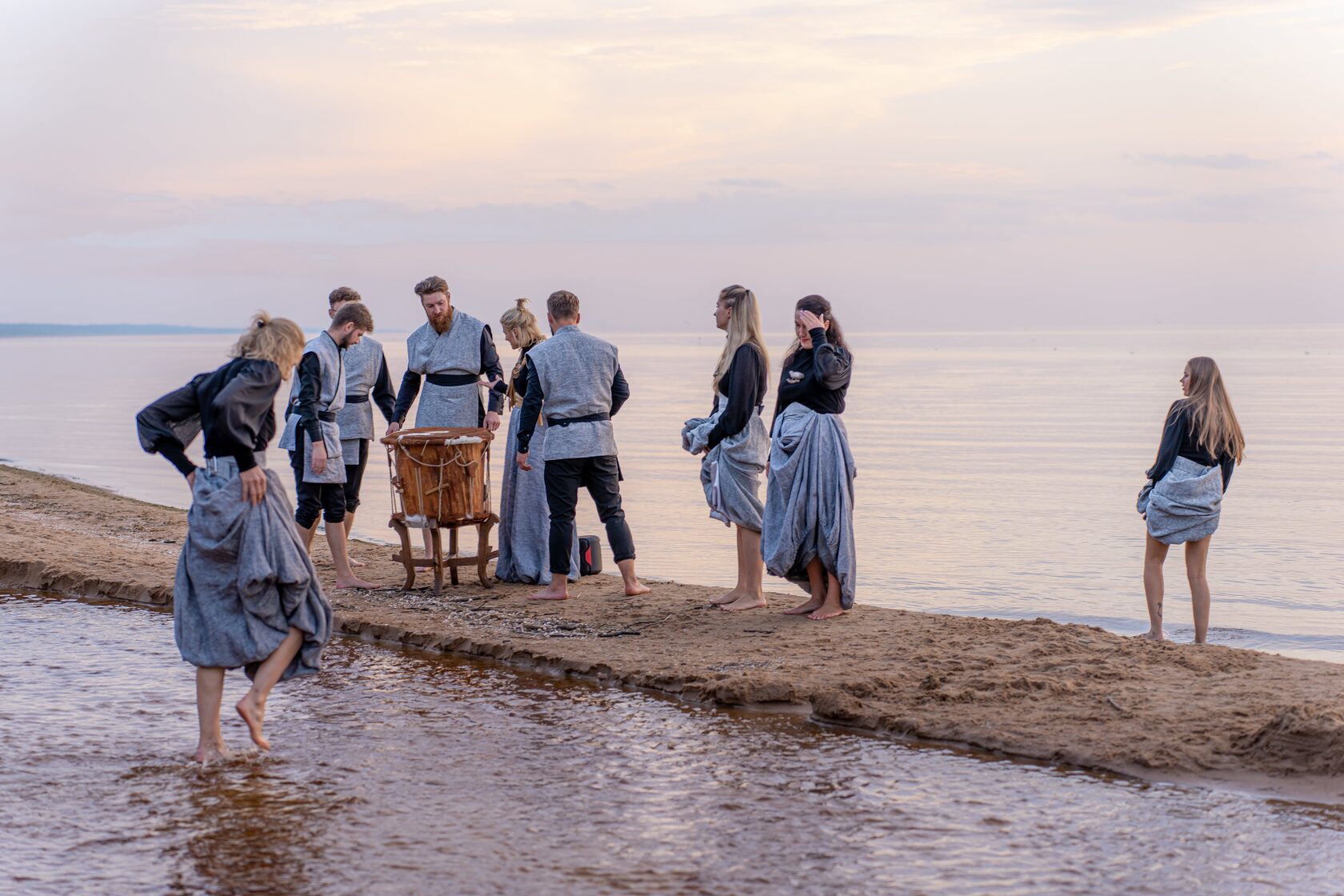
Latvian culture is a fascinating blend of ancient traditions and contemporary influences, shaped by the rich history of this country on the shores of the Baltic Sea. From national celebrations and traditional dances to the unique language, Latvian culture offers an engaging journey into the heritage of this nation. The vibrant tapestry of Latvian traditions reflects the enduring spirit and identity of its people.
History of Latvian culture
The region of Latvia has been inhabited since 9000 BC, with Baltic tribes—ancestors of present-day Latvians—arriving around 3000 BC. In the 13th century, Baltic Germans settled in Latvia after its conquest, gradually assuming positions of power and forming the upper class. Latvians and Livonians, in contrast, became serfs by the 16th century. This led to the Germanization of educated individuals from other backgrounds, although some local traditions persisted.
The 19th century witnessed the abolition of serfdom, sparking the First Latvian National Awakening. Spearheaded by the "Young Latvians," this movement encouraged Latvians to embrace the arts and scholarship while safeguarding their cultural heritage and language. Russification followed, but it was countered by the leftist New Current movement in the early 20th century, fostering a thriving period for Latvian culture. This era culminated in the second Latvian National Awakening, ultimately leading to Latvia's declaration of independence in 1918.
However, on May 15, 1934, Kārlis Ulmanis seized power in a coup d'état, establishing an authoritarian regime that lasted until the outbreak of World War II and the subsequent Soviet occupation in 1939–40. Despite the political challenges, this period is often regarded as a "golden age" for Latvian culture. During the war, Latvia lost its de facto independence during the German occupation from 1941 to 1945, as it was then occupied by the USSR and became the Latvian SSR. Soviet rule persisted until 1991, when the third Latvian National Awakening led to the restoration of independence.
The 19th century witnessed the abolition of serfdom, sparking the First Latvian National Awakening. Spearheaded by the "Young Latvians," this movement encouraged Latvians to embrace the arts and scholarship while safeguarding their cultural heritage and language. Russification followed, but it was countered by the leftist New Current movement in the early 20th century, fostering a thriving period for Latvian culture. This era culminated in the second Latvian National Awakening, ultimately leading to Latvia's declaration of independence in 1918.
However, on May 15, 1934, Kārlis Ulmanis seized power in a coup d'état, establishing an authoritarian regime that lasted until the outbreak of World War II and the subsequent Soviet occupation in 1939–40. Despite the political challenges, this period is often regarded as a "golden age" for Latvian culture. During the war, Latvia lost its de facto independence during the German occupation from 1941 to 1945, as it was then occupied by the USSR and became the Latvian SSR. Soviet rule persisted until 1991, when the third Latvian National Awakening led to the restoration of independence.
Latvian culture and traditions
The Latvian Song and Dance Festival stands as a remarkable testament to Latvia's cultural richness, recognized by UNESCO as a Masterpiece of the Oral and Intangible Heritage of Humanity. This grand celebration encompasses a myriad of performances, from choir singing to traditional dances, instrumental music, and more, showcasing the profound traditions of Latvian a cappella singing.
At the heart of Latvian summer lies the Līgo and Jāņi celebration, a vital and cherished tradition held on the 23rd and 24th of June. Rooted in ancient pagan practices, this Midsummer's Celebration involves staying awake through the shortest night of the year, filled with bonfires, singing, dancing, and various customs, such as wearing wildflower wreaths and jumping over bonfires.
The celebration also embraces culinary delights, featuring staples like Jāņu siers, a fresh sour milk cheese, and locally favored craft beers. Beyond Midsummer, Latvia preserves a wealth of ancient traditions, each linked to seasons, sun cycles, and historical events. Notable festivities include Meteņi, Ķekatas, Easter, Christmas, and Mārtiņi, each carrying unique activities, songs, and customs.
Dainas, the four-lined poetic expressions of Latvian wisdom, encapsulate the essence of daily life over centuries, symbolizing Latvia's cultural identity. Furthermore, Latvian folk costumes, adorned with intricate handiwork and symbolic ornaments, showcase the nation's rich artistic heritage.
Inventions like the Christmas tree and the unique kokle, a plucked stringed instrument, further contribute to Latvia's cultural tapestry. The kokle, with its distinctive sound and ritual significance, has evolved into a national symbol, played prominently during the Song and Dance Festival. Moreover, November marks significant national holidays, including the Proclamation Day of the Republic of Latvia, Lāčplēsis Day, and the Restoration of Latvian Independence. Overall, Latvia's culture and traditions invite exploration, providing a profound connection to the nation's vibrant history and identity.
At the heart of Latvian summer lies the Līgo and Jāņi celebration, a vital and cherished tradition held on the 23rd and 24th of June. Rooted in ancient pagan practices, this Midsummer's Celebration involves staying awake through the shortest night of the year, filled with bonfires, singing, dancing, and various customs, such as wearing wildflower wreaths and jumping over bonfires.
The celebration also embraces culinary delights, featuring staples like Jāņu siers, a fresh sour milk cheese, and locally favored craft beers. Beyond Midsummer, Latvia preserves a wealth of ancient traditions, each linked to seasons, sun cycles, and historical events. Notable festivities include Meteņi, Ķekatas, Easter, Christmas, and Mārtiņi, each carrying unique activities, songs, and customs.
Dainas, the four-lined poetic expressions of Latvian wisdom, encapsulate the essence of daily life over centuries, symbolizing Latvia's cultural identity. Furthermore, Latvian folk costumes, adorned with intricate handiwork and symbolic ornaments, showcase the nation's rich artistic heritage.
Inventions like the Christmas tree and the unique kokle, a plucked stringed instrument, further contribute to Latvia's cultural tapestry. The kokle, with its distinctive sound and ritual significance, has evolved into a national symbol, played prominently during the Song and Dance Festival. Moreover, November marks significant national holidays, including the Proclamation Day of the Republic of Latvia, Lāčplēsis Day, and the Restoration of Latvian Independence. Overall, Latvia's culture and traditions invite exploration, providing a profound connection to the nation's vibrant history and identity.
Latvia culture: religion
Latvia, a nation with a diverse religious landscape, is primarily a multidenominational Christian country. The largest Christian community is Lutheran, constituting 25%-35% of the population, predominantly in Western and Central Latvia. Catholicism holds sway over 20%-25% of Latvians, particularly in Latgale, located in Eastern Latvia.
The Russian Orthodox faith, embraced by 18%-22% of the population, is prevalent among Russophone Soviet settlers and their descendants. Old Believers, a schismatic Orthodox group that sought refuge in Latgale during the 17th century, comprises approximately 1.7% of the followers.
A variety of smaller Protestant Christian denominations collectively make up 1.5%-2.5% of Latvia's population. Beyond Christianity, Latvia is home to minority faiths, including neo-Pagan Dievturi, Jewish, and Muslim communities, each representing just 0.01%-0.05% of the total population.
During the Soviet occupation, atheism was actively promoted by the state, leading to discrimination against religious communities. This affected various groups, with Lutheran, Old Believers, and Jewish communities experiencing the most significant declines. Presently, around 18% of Latvia's population identifies as irreligious.
It's essential to note that religious affiliation in Latvia is self-reported by religious organizations, as the national census does not record religion. This method introduces a potential margin of error, and percentages may vary across different sources.
The Russian Orthodox faith, embraced by 18%-22% of the population, is prevalent among Russophone Soviet settlers and their descendants. Old Believers, a schismatic Orthodox group that sought refuge in Latgale during the 17th century, comprises approximately 1.7% of the followers.
A variety of smaller Protestant Christian denominations collectively make up 1.5%-2.5% of Latvia's population. Beyond Christianity, Latvia is home to minority faiths, including neo-Pagan Dievturi, Jewish, and Muslim communities, each representing just 0.01%-0.05% of the total population.
During the Soviet occupation, atheism was actively promoted by the state, leading to discrimination against religious communities. This affected various groups, with Lutheran, Old Believers, and Jewish communities experiencing the most significant declines. Presently, around 18% of Latvia's population identifies as irreligious.
It's essential to note that religious affiliation in Latvia is self-reported by religious organizations, as the national census does not record religion. This method introduces a potential margin of error, and percentages may vary across different sources.
Latvian culture: clothes
Latvian traditional costumes showcase remarkable diversity with unique variations in each cultural-historic region, including Vidzeme, Latgale, Augšzeme, Zemgale, and Kurzeme. The complexity of these costumes is notable, considering they were entirely handcrafted in the old times. Craftsmen invested extensive time, often a year, to create a single festive costume. The materials, primarily flax and wool, underwent intricate processes, including sheep shearing, wool washing, flax soaking, and manual spinning. The use of natural plant dyes, sourced from meadows and forests, added vibrant colors to the costumes. Latvian patterns, still present in knitted scarves and mittens today, were once an essential part of a bride's dowry, highlighting the cultural significance of these garments. The grand procession during the Song and Dance Festival remains an excellent opportunity to witness the beauty and diversity of Latvian national costumes, a tradition dating back to the 19th century and recognized by UNESCO for its cultural heritage.
Latvian culture: art
In the early 20th century, Latvia experienced a rapid wave of urbanization that coincided with the flourishing Art Nouveau movement. This architectural style left an indelible mark on Latvian cities, with Riga emerging as a standout showcase of Art Nouveau elegance.
At the heart of Riga's historical center, a UNESCO World Heritage site, lies a treasure trove of Art Nouveau architecture, boasting an unparalleled collection of over 800 buildings. Characterized by ornate embellishments, Art Nouveau design often incorporates stylized depictions of nature, featuring elements like flowers, leaves, vines, and animals.
Beyond their captivating exteriors, Art Nouveau buildings in Latvia reveal equally stunning interiors. These spaces are adorned with intricate details, including painted ceilings, grand entrance halls, and sumptuous staircases. Notable examples of Art Nouveau masterpieces grace prominent streets in Riga, such as Alberta Street, Elizabetes Street, and Strēlnieku Street. This architectural legacy stands as a testament to Latvia's embrace of Art Nouveau's decorative and innovative spirit during a transformative period in its history.
At the heart of Riga's historical center, a UNESCO World Heritage site, lies a treasure trove of Art Nouveau architecture, boasting an unparalleled collection of over 800 buildings. Characterized by ornate embellishments, Art Nouveau design often incorporates stylized depictions of nature, featuring elements like flowers, leaves, vines, and animals.
Beyond their captivating exteriors, Art Nouveau buildings in Latvia reveal equally stunning interiors. These spaces are adorned with intricate details, including painted ceilings, grand entrance halls, and sumptuous staircases. Notable examples of Art Nouveau masterpieces grace prominent streets in Riga, such as Alberta Street, Elizabetes Street, and Strēlnieku Street. This architectural legacy stands as a testament to Latvia's embrace of Art Nouveau's decorative and innovative spirit during a transformative period in its history.
Latvian permaculture festival
The Latvian Permaculture Festival is an international event scheduled for the weekend of August 12th-13th in Rogovka, Latvia. Anticipating the participation of a small group of English-speaking guests from the Baltic States, Finland, and other countries, the festival aims to share the experiences gained over more than 10 years of the Permaculture movement in Latvia. Each visitor will be paired with a local English-speaking buddy to provide support with translations and insights throughout the weekend. Three special English-speaking sessions on August 12th, each lasting up to one hour, will offer an overview of the festival's content, facilitate knowledge exchange, and provide a space for brainstorming and networking. The festival serves as a platform for sharing expertise and fostering connections within the field of permaculture.