
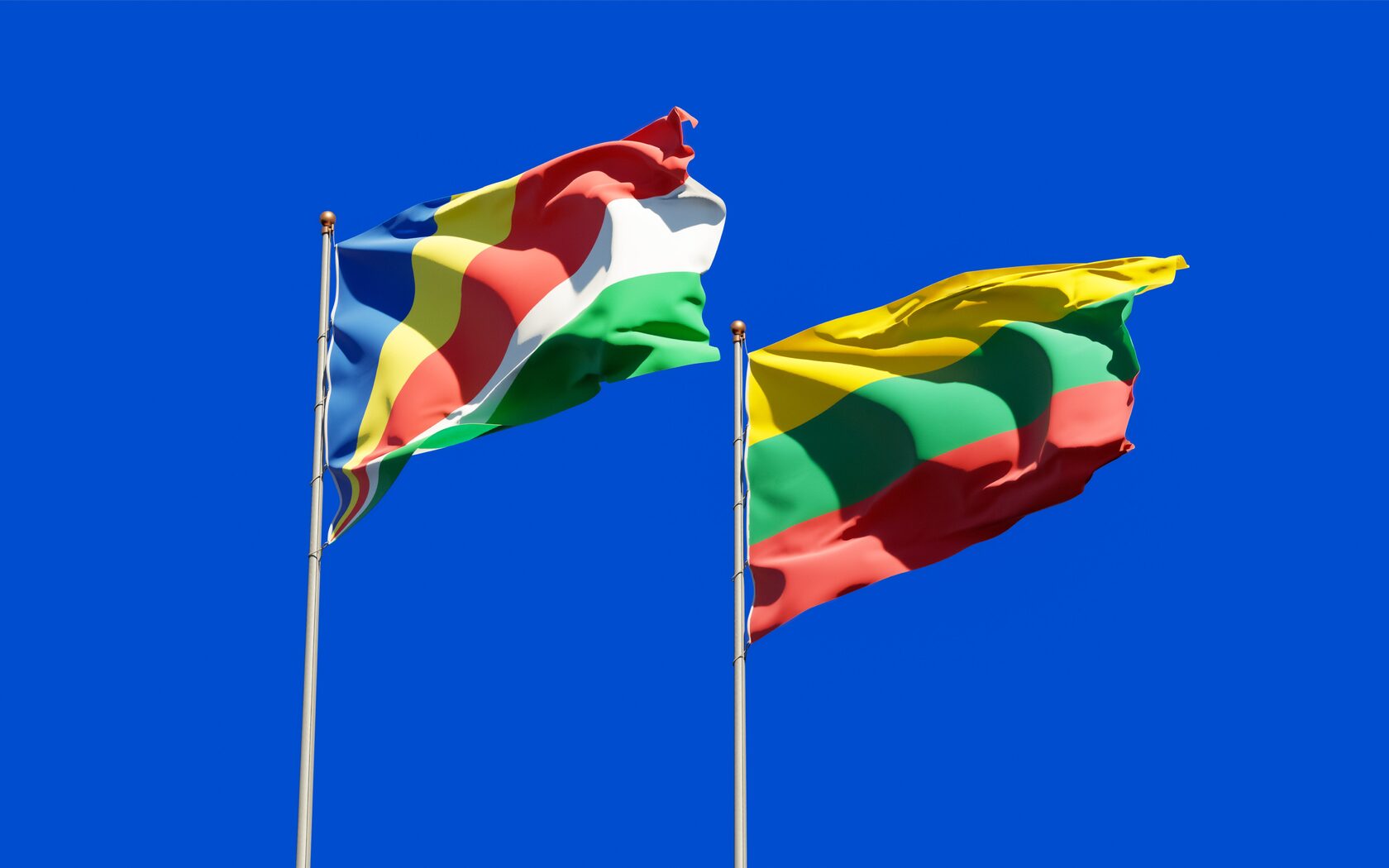
Let's talk about the language in Lithuania.
What language is spoken in Lithuania?
Lithuanian is categorized as an East Baltic language within the broader Indo-European language family's Baltic branch. Serving as the official language of Lithuania, it also holds the status of one of the official languages within the European Union. The language boasts approximately 2.8 million native speakers in Lithuania, with an additional 1,000,000 speakers residing in other regions. Notably, around half a million individuals in Lithuania, despite their non-Lithuanian backgrounds, use Lithuanian as a second language in their daily communication.
Is English an official language in Lithuania?
While English is widely taught in schools and is spoken by many Lithuanians, especially in urban areas and among the younger population, it does not hold official status in the country.
How old is Lithuanian language?
Lithuanian, situated in Western Europe between Russia and Sweden, has linguistic roots extending to Sanskrit, Latin, and Ancient Greek, with an estimated age of about 5,000 years. Linguists posit that Lithuanian may have had an impact on the early speakers of German, Italian, and even English.
Lithuanian language: history
Lithuanian, among Indo-European languages, exhibits conservatism in certain aspects of its grammar and phonology, preserving archaic features reminiscent of ancient languages like Sanskrit (especially its early form, Vedic Sanskrit) and Ancient Greek. Despite its late attestation, with the earliest texts dating back to approximately 1500, Lithuanian serves as a crucial source for reconstructing Proto-Indo-European.
The linguistic evolution of Lithuanian involves its origin from the Eastern Baltic subgroup, remaining remarkably unchanged until around 1 AD. Subsequent influences from Finnic languages around 500 AD, particularly in the northern part of Eastern Balts, contributed to the divergence of language in the region. This impact was less pronounced in the Southern Balts, preserving many older linguistic features that characterize modern Lithuanian.
The differentiation between Lithuanian and Latvian commenced after 800 AD, with transitional dialects persisting until the 14th or 15th century. Historical factors, such as the influence of the German Sword Brethren and later Germanization, played a role in shaping the language's development. Noteworthy linguists like Franz Bopp, Ferdinand de Saussure, and others have extensively studied Lithuanian.
The geographical boundaries of Lithuanian, as suggested by linguist Jan Safarewicz, have evolved over time, coinciding partly with religious shifts. Proto-Balto-Slavic, branching from Proto-Indo-European, further divided into Proto-Baltic and Proto-Slavic, with Lithuanian belonging to the Eastern Baltic group.
Lithuanian's usage in written form began with the introduction of Christianity in the Grand Duchy of Lithuania, and the language persisted at the Lithuanian royal court. Despite the dominance of Latin and Church Slavonic in written records, Lithuanian maintained its spoken presence.
The surviving written records in Lithuanian date from the 16th century, with the first book printed in 1547. Notably, Lithuanian became the official language of Lithuania in 1918, as recognized by the 1922 Constitution. Throughout history, the language faced challenges, including bans on education and publishing during the Russian occupation in 1864, but Lithuanian resilience and cultural significance persisted.
The contributions of linguist Jonas Jablonskis were pivotal in shaping Standard Lithuanian, based on the Western Aukštaitian dialect. Lithuanian's status as the official language was reaffirmed in 1988 and further solidified by the Act of the Re-Establishment of the State of Lithuania in 1990, marking a significant milestone in the nation's linguistic history.
The linguistic evolution of Lithuanian involves its origin from the Eastern Baltic subgroup, remaining remarkably unchanged until around 1 AD. Subsequent influences from Finnic languages around 500 AD, particularly in the northern part of Eastern Balts, contributed to the divergence of language in the region. This impact was less pronounced in the Southern Balts, preserving many older linguistic features that characterize modern Lithuanian.
The differentiation between Lithuanian and Latvian commenced after 800 AD, with transitional dialects persisting until the 14th or 15th century. Historical factors, such as the influence of the German Sword Brethren and later Germanization, played a role in shaping the language's development. Noteworthy linguists like Franz Bopp, Ferdinand de Saussure, and others have extensively studied Lithuanian.
The geographical boundaries of Lithuanian, as suggested by linguist Jan Safarewicz, have evolved over time, coinciding partly with religious shifts. Proto-Balto-Slavic, branching from Proto-Indo-European, further divided into Proto-Baltic and Proto-Slavic, with Lithuanian belonging to the Eastern Baltic group.
Lithuanian's usage in written form began with the introduction of Christianity in the Grand Duchy of Lithuania, and the language persisted at the Lithuanian royal court. Despite the dominance of Latin and Church Slavonic in written records, Lithuanian maintained its spoken presence.
The surviving written records in Lithuanian date from the 16th century, with the first book printed in 1547. Notably, Lithuanian became the official language of Lithuania in 1918, as recognized by the 1922 Constitution. Throughout history, the language faced challenges, including bans on education and publishing during the Russian occupation in 1864, but Lithuanian resilience and cultural significance persisted.
The contributions of linguist Jonas Jablonskis were pivotal in shaping Standard Lithuanian, based on the Western Aukštaitian dialect. Lithuanian's status as the official language was reaffirmed in 1988 and further solidified by the Act of the Re-Establishment of the State of Lithuania in 1990, marking a significant milestone in the nation's linguistic history.
Is Lithuanian a Slavic language?
Lithuanian belongs to the Baltic language group and is distinct from Slavic languages. Within the Baltic branch, the only two surviving languages are Lithuanian and Latvian. Additionally, Old Prussian, although now an extinct language, was once part of the Baltic language group.
How hard is Lithuanian language?
Lithuanian is considered a challenging language for learners, primarily due to its complex grammar, extensive use of grammatical cases, and unique phonological features. The language has retained archaic elements from Proto-Indo-European, making it distinct from other Indo-European languages. Additionally, the use of diacritic marks and the presence of grammatical gender, along with dual number in some dialects, contribute to the linguistic complexity.
How difficult is Lithuanian? Discussing on Reddit
Olaf from Berlin says: "Having delved into Lithuanian briefly in the past, I found the language to be enchanting and refined. Lithuania, with its captivating beauty, added to the allure of learning the language.
Nevertheless, mastering Lithuanian posed its challenges. While grappling with verb conjugations, grammatical cases, and unfamiliar vocabulary, the real obstacle turned out to be the scarcity of content. Regrettably, the insufficient availability of media and content in Lithuanian became a decisive factor, leading me to abandon my language-learning journey. I believe that, had Lithuanian boasted a wealth of content akin to languages like German or Italian, I would have eagerly embraced the complexity of the language for the sake of learning it."
Nevertheless, mastering Lithuanian posed its challenges. While grappling with verb conjugations, grammatical cases, and unfamiliar vocabulary, the real obstacle turned out to be the scarcity of content. Regrettably, the insufficient availability of media and content in Lithuanian became a decisive factor, leading me to abandon my language-learning journey. I believe that, had Lithuanian boasted a wealth of content akin to languages like German or Italian, I would have eagerly embraced the complexity of the language for the sake of learning it."
Latvia and Lithuanian language on Reddit
Kim from Latvia says: "Lithuanian and Latvian, having diverged long ago, share certain word similarities, yet constructing sentences or holding conversations proves challenging, especially in a sober state—a regrettable limitation.
For instance:
Additionally, some similar-sounding words bear distinct meanings, such as "druska" (salt in Lithuanian) clashing with "drusku" in Latvian, meaning "a little bit" or "a pinch," leading to occasional confusion."
For instance:
- "Parduotuvė" (shop in Lithuanian) corresponds to "Veikals" in Latvian, recognizable to Latvians due to the Latvian verb "pārdot" (to sell). However, the recognition is not mutual.
- "Vištiena" (poultry in Lithuanian) finds a parallel in Latvian as "Vistas gaļa," somewhat familiar to Latvians through the Latvian word "vista" (hen), though "kiaulienos" (pork) diverges significantly as "cūkgaļa" in Latvian.
- "Mėsa" (meat in Lithuanian) aligns with "gaļa" in Latvian, recognizable by Latvians, yet the reverse recognition might not be as straightforward.
Additionally, some similar-sounding words bear distinct meanings, such as "druska" (salt in Lithuanian) clashing with "drusku" in Latvian, meaning "a little bit" or "a pinch," leading to occasional confusion."
Lithuanian vs Russian language
Lithuanian and Russian exhibit a closer linguistic relationship compared to, for instance, Russian and Spanish, albeit not extensively. It's crucial to acknowledge Lithuania's historical subjugation under Russian influence, leading to the assimilation of numerous loanwords.
Both languages, Russian and Lithuanian, showcase conservatism and a prevalence of inflections, resulting in apparent grammatical similarities. However, individuals proficient in one language would still need considerable effort to fully comprehend the other—though notably less effort compared to an English speaker attempting the same task.
Both languages, Russian and Lithuanian, showcase conservatism and a prevalence of inflections, resulting in apparent grammatical similarities. However, individuals proficient in one language would still need considerable effort to fully comprehend the other—though notably less effort compared to an English speaker attempting the same task.
Latvian vs Lithuanian language
In broad terms, the distinctions between Lithuanian and Latvian can be characterized by the archaic nature of Lithuanian compared to Latvian. Modern written Lithuanian often serves as a "protolanguage" for Latvian due to its preservation of old sound combinations. Notably, Lithuanian maintains sound combinations like an, en, in, un, which evolved into uo, ie, ī, ū in Latvian. Additionally, shifts in diphthongs, vowel lengths, and palatalized consonants contribute to the linguistic differences.
Lithuanian and Latvian share similarities in their morphological features, including gender, number, and cases. Both languages have two grammatical genders, masculine and feminine, and two numbers, singular and plural, with Lithuanian dialects potentially incorporating the dual number. However, differences arise in the declension of nouns and adjectives, as well as the comparison of adjectives.
Furthermore, the stress patterns diverge, with Lithuanian having free stress and Latvian featuring fixed stress on the first syllable. The intonations inherited from Proto-Baltic also differ, with Latvian preserving the falling character of circumflex intonation, while Lithuanian exhibits a rising intonation.
The verb systems in both languages share similarities in terms of tenses, moods, and participles. While the word order and syntax are generally comparable, certain distinctions exist in word formation through affixes and compounding.
Lexically, the early vocabulary shows more semantic variations than structural differences, with some words having similar roots but differing in meaning. Loanwords from Slavic and Germanic languages have influenced Baltic languages, especially in Old Prussian and Latvian, reflecting historical interactions and colonization.
Orthographically, both Lithuanian and Latvian alphabets are based on the Roman (Latin) alphabet, with diacritical marks used to denote specific sounds and tones. The usage of accents in linguistic literature aids in representing intonations and vowel lengths. Old Prussian orthography, influenced by German orthography, lacks consistency and varies among written records.
Lithuanian and Latvian share similarities in their morphological features, including gender, number, and cases. Both languages have two grammatical genders, masculine and feminine, and two numbers, singular and plural, with Lithuanian dialects potentially incorporating the dual number. However, differences arise in the declension of nouns and adjectives, as well as the comparison of adjectives.
Furthermore, the stress patterns diverge, with Lithuanian having free stress and Latvian featuring fixed stress on the first syllable. The intonations inherited from Proto-Baltic also differ, with Latvian preserving the falling character of circumflex intonation, while Lithuanian exhibits a rising intonation.
The verb systems in both languages share similarities in terms of tenses, moods, and participles. While the word order and syntax are generally comparable, certain distinctions exist in word formation through affixes and compounding.
Lexically, the early vocabulary shows more semantic variations than structural differences, with some words having similar roots but differing in meaning. Loanwords from Slavic and Germanic languages have influenced Baltic languages, especially in Old Prussian and Latvian, reflecting historical interactions and colonization.
Orthographically, both Lithuanian and Latvian alphabets are based on the Roman (Latin) alphabet, with diacritical marks used to denote specific sounds and tones. The usage of accents in linguistic literature aids in representing intonations and vowel lengths. Old Prussian orthography, influenced by German orthography, lacks consistency and varies among written records.