
South Korea's climate is a topic of great diversity and seasonal change. Located on the Korean Peninsula in East Asia, South Korea experiences four distinct seasons, each with its own unique weather patterns and characteristics. Understanding the climate in South Korea is essential for anyone planning to visit or live in the country, as it significantly impacts daily life, activities, and even cultural events. In this introduction, we will explore the key features of South Korea's climate, offering insights into the seasonal variations, weather conditions, and their implications for both residents and travelers. From the snowy winters to the hot and humid summers, South Korea's climate is a fascinating subject that influences everything from fashion to agriculture and outdoor recreation. Let's delve into the diverse and dynamic climate of South Korea, providing a foundational understanding of what to expect in this beautiful and culturally rich nation.
Weather and climate in South Korea
South Korea, situated in the temperate zone, is renowned for experiencing four distinct seasons. Winters are typically cold and dry, while summers are generally hot and humid with significant rainfall. Spring and autumn tend to be drier and clearer. The average annual temperature in South Korea hovers around 13 degrees Celsius, but this can vary between 10 and 16 degrees Celsius depending on the specific region. The country falls within a relatively humid area, receiving notably more precipitation than the global average, with most of the rainfall occurring during the summer months.
Climate of South Korea depending on the season
South Korea's weather is notably straightforward and easy to grasp, with minimal regional variations across the country, making it neatly divisible into four distinct seasons.
Spring (April to June) is a delightful season with pleasant daily temperatures ranging from 15 to 18°C. During this time, the landscape blooms with colorful flowers, particularly the enchanting pink cherry blossoms in places like Gyeongju. Spring offers the least likelihood of inclement weather and hosts numerous festivals and events. Many locals head to the National Parks, such as Songnisan, Seoraksan, and Jirisan, for outdoor activities. However, it's also the most popular time to visit, so expect crowds.
Summer (July to August) is the hottest period of the year, with temperatures ranging from 23°C to 30°C. It's also the wettest season, as monsoon rains contribute to half of the annual rainfall. High humidity levels may lead you to seek refuge in air-conditioned spaces in cities like Seoul or enjoy the sea breezes in coastal areas, such as Busan and the popular Haeundae Beach.
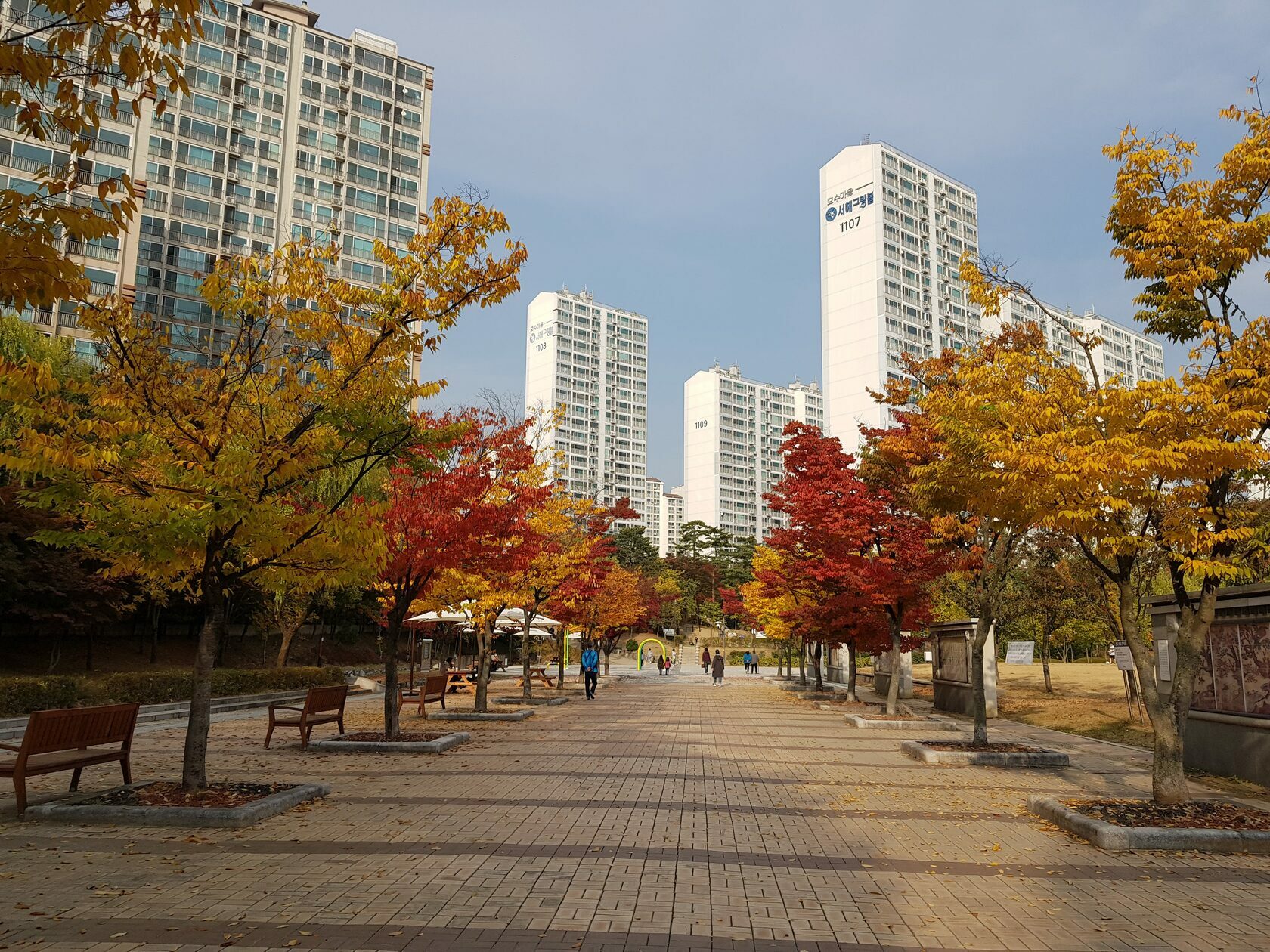
Autumn (September to November) follows the muggy heat and rains of summer with a burst of color and festivals. The landscape is adorned with stunning shades of orange and red, especially in the National Parks like Songnisan, Jirisan, and Seoraksan. October remains mild enough to wear a t-shirt during the day in seaside resorts like Jeju and higher altitudes. As the season progresses, you may want to consider packing extra layers. Autumn, with its mild temperatures (average: 19-21°C), low rainfall, and natural beauty, competes with spring as the best time to visit South Korea.
Winter (December to March) ushers in a significant drop in temperatures. While summer sees highs of 30°C, winter can bring temperatures as low as -20°C in the northern regions of Gangwon-do Province. However, it tends to be milder along the southern coast and on Jeju Island in the far south. Winter, which spans from December to March, is cold but relatively dry, offering charming views with crisp white snow. It's an ideal time for winter sports enthusiasts, with ski resorts in Gyeonggi-do Province and Gangwon-do receiving higher than average annual snowfall.
Spring (April to June) is a delightful season with pleasant daily temperatures ranging from 15 to 18°C. During this time, the landscape blooms with colorful flowers, particularly the enchanting pink cherry blossoms in places like Gyeongju. Spring offers the least likelihood of inclement weather and hosts numerous festivals and events. Many locals head to the National Parks, such as Songnisan, Seoraksan, and Jirisan, for outdoor activities. However, it's also the most popular time to visit, so expect crowds.
Summer (July to August) is the hottest period of the year, with temperatures ranging from 23°C to 30°C. It's also the wettest season, as monsoon rains contribute to half of the annual rainfall. High humidity levels may lead you to seek refuge in air-conditioned spaces in cities like Seoul or enjoy the sea breezes in coastal areas, such as Busan and the popular Haeundae Beach.
Autumn (September to November) follows the muggy heat and rains of summer with a burst of color and festivals. The landscape is adorned with stunning shades of orange and red, especially in the National Parks like Songnisan, Jirisan, and Seoraksan. October remains mild enough to wear a t-shirt during the day in seaside resorts like Jeju and higher altitudes. As the season progresses, you may want to consider packing extra layers. Autumn, with its mild temperatures (average: 19-21°C), low rainfall, and natural beauty, competes with spring as the best time to visit South Korea.
Winter (December to March) ushers in a significant drop in temperatures. While summer sees highs of 30°C, winter can bring temperatures as low as -20°C in the northern regions of Gangwon-do Province. However, it tends to be milder along the southern coast and on Jeju Island in the far south. Winter, which spans from December to March, is cold but relatively dry, offering charming views with crisp white snow. It's an ideal time for winter sports enthusiasts, with ski resorts in Gyeonggi-do Province and Gangwon-do receiving higher than average annual snowfall.
The climate of South Korea compared to us: Europeans and Americans
Seoul's climate is classified as Humid continental, severe dry winter, hot summer (Köppen climate classification: Dwa), while New York has a Humid subtropical, no dry season climate (Cfa).
Seoul generally experiences slightly warmer weather compared to New York. The average mean temperature in Seoul is 13.89°C (57.0°F), while in New York, the average temperature is 13.27°C (55.89°F), resulting in a difference of 0.62°C (33.12°F). Seoul reaches its highest average temperatures in August, with daytime temperatures possibly reaching up to 27.55°C (81.59°F), whereas New York experiences its hottest month in July, with an average high temperature of 26.27°C (79.29°F).
On the other hand, Seoul's coldest month is January, with an average low temperature of -5.18°C (22.68°F). In New York, January is also the coldest month, with nighttime temperatures frequently dropping below -3.26°C (26.13°F).
In terms of precipitation, Seoul receives approximately 1.64 times more rainfall than New York. Seoul averages around 131.35mm of precipitation, while New York has an average of 80.02mm of rainfall.
Seoul generally experiences slightly warmer weather compared to New York. The average mean temperature in Seoul is 13.89°C (57.0°F), while in New York, the average temperature is 13.27°C (55.89°F), resulting in a difference of 0.62°C (33.12°F). Seoul reaches its highest average temperatures in August, with daytime temperatures possibly reaching up to 27.55°C (81.59°F), whereas New York experiences its hottest month in July, with an average high temperature of 26.27°C (79.29°F).
On the other hand, Seoul's coldest month is January, with an average low temperature of -5.18°C (22.68°F). In New York, January is also the coldest month, with nighttime temperatures frequently dropping below -3.26°C (26.13°F).
In terms of precipitation, Seoul receives approximately 1.64 times more rainfall than New York. Seoul averages around 131.35mm of precipitation, while New York has an average of 80.02mm of rainfall.
South Korea and climate change
The connection between increasing temperatures and the severity of typhoons in South Korea is indeed a significant concern. Warmer seas, resulting from higher global temperatures, provide more energy to tropical cyclones, making them more powerful and destructive. Additionally, a warmer atmosphere can hold more moisture, leading to increased rainfall during these storms. South Korea has witnessed a notable increase in the frequency and intensity of tropical cyclones, with the country experiencing nine such events from 2000 to 2020, which is significantly higher than the global average.
The role of climate change and its impacts on extreme weather events, including typhoons, cannot be underestimated. South Korea, like many other countries, contributes to greenhouse gas emissions that drive climate change. The release of carbon dioxide and other greenhouse gases into the atmosphere has led to global warming and its associated effects.
As you mentioned, South Korea had 11.89 tonnes of carbon dioxide emissions per capita in 2021, which places it among the top emitting countries in the world. These emissions are primarily associated with activities such as energy production, transportation, and industrial processes. To address these challenges, countries worldwide are working on policies and initiatives to reduce emissions, transition to cleaner energy sources, and mitigate the impacts of climate change. The importance of addressing climate change and its consequences, including more intense typhoons, is a global concern that requires international cooperation and concerted efforts to reduce emissions and limit the damage caused by extreme weather events.
The role of climate change and its impacts on extreme weather events, including typhoons, cannot be underestimated. South Korea, like many other countries, contributes to greenhouse gas emissions that drive climate change. The release of carbon dioxide and other greenhouse gases into the atmosphere has led to global warming and its associated effects.
As you mentioned, South Korea had 11.89 tonnes of carbon dioxide emissions per capita in 2021, which places it among the top emitting countries in the world. These emissions are primarily associated with activities such as energy production, transportation, and industrial processes. To address these challenges, countries worldwide are working on policies and initiatives to reduce emissions, transition to cleaner energy sources, and mitigate the impacts of climate change. The importance of addressing climate change and its consequences, including more intense typhoons, is a global concern that requires international cooperation and concerted efforts to reduce emissions and limit the damage caused by extreme weather events.
Characteristics of Seoul South Korea climate
Seoul's climate is characterized by a significant annual temperature range. The coldest month, January, sees an average temperature of approximately 26 °F (-3 °C), while the warmest month, August, has a mean temperature of around 78 °F (25 °C). The city receives an annual precipitation of about 54 inches (1,370 mm), with a substantial concentration of rainfall occurring during the summer months.
Air pollution has become a concerning issue in the Seoul metropolitan area and Yŏngdŭng-p’o (Yeongdeungpo), an industrial region located in the southwest just south of the Han River. This problem is largely attributed to the increasing number of automobiles and industrial facilities in the region. Over the years, the Han River has also suffered from high pollution levels. However, since the early 1980s, pollution levels have been significantly reduced through various measures, including controlling the river's water level and constructing large-scale sewage treatment facilities. These efforts have contributed to improving the environmental quality in the area.
Air pollution has become a concerning issue in the Seoul metropolitan area and Yŏngdŭng-p’o (Yeongdeungpo), an industrial region located in the southwest just south of the Han River. This problem is largely attributed to the increasing number of automobiles and industrial facilities in the region. Over the years, the Han River has also suffered from high pollution levels. However, since the early 1980s, pollution levels have been significantly reduced through various measures, including controlling the river's water level and constructing large-scale sewage treatment facilities. These efforts have contributed to improving the environmental quality in the area.