
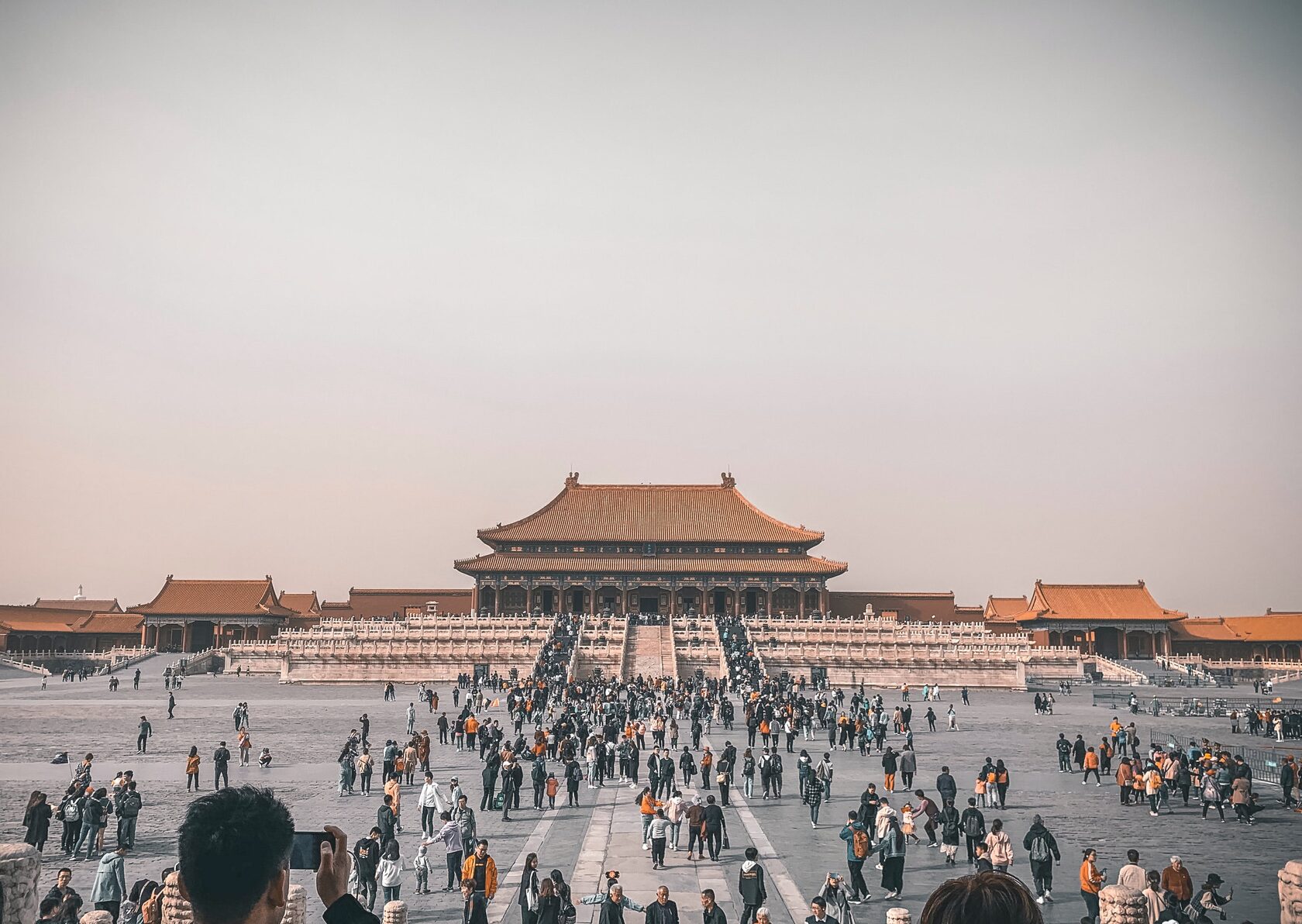
Today we will talk about the population of China.
How many people live in China?
As of mid-year 2023, China's estimated population stands at approximately 1,425,671,352 people. This figure represents about 17.72% of the total global population, positioning China as the second most populous country in the world.
China fertility rate and life expectancy
The fertility rate in China was estimated to be around 1.3 children per woman.
Life expectancy in China continues to increase it was approximately 76-77 years.
Life expectancy in China continues to increase it was approximately 76-77 years.
Population of China: decline
Low fertility rates in China can be attributed significantly to the repercussions of the country's one-child policy. The substantial expenses associated with raising children, evolving societal perspectives on family and marriage, and the deceleration of economic growth are commonly cited as contributing factors to the decline in population.
China cities by population
- Shanghai - 22,315,474
- Beijing - 11,716,620
- Tianjin - 11,090,314
- Guangzhou - 11,071,424
- Shenzhen - 10,358,381
- Wuhan - 9,785,388
- Dongguan - 8,000,000
- Chongqing - 7,457,600
- Chengdu - 7,415,590
- Nanjing - 7,165,292
China population by gender
In the year 2022, China's population consisted of approximately 722 million male residents and 690 million female residents, totaling around 1.41 billion people.
China population by religion
Among the population, there are 499 million followers of folk and ethnic religions (constituting 34 percent), 474 million individuals identifying as agnostics (making up 33 percent), 228 million practicing Buddhists (comprising 16 percent), 20 million Christians (accounting for 7.4 percent), 100 million atheists (representing 7 percent), 23.7 million Muslims (constituting 1.7 percent), and adherents of other religions collectively forming less than 1 percent of the population. This includes 5.9 million Taoists, 1.8 million Confucians, 20,500 Sikhs, and 2,900 Jews.
Muslim population in China
Islam has been practiced in China since the 7th century CE. Muslims constitute a minority in China, making up approximately 1 to 1.5 percent of the total population, which translates to around 20 million people based on various estimates. While the Hui Muslims form the largest Muslim group, the most concentrated Muslim population is found in Xinjiang, where there is a significant Uyghur presence. Additionally, notable Muslim communities exist in areas such as Ningxia, Gansu, and Qinghai. Among China's 55 officially recognized minority groups, ten are predominantly of the Sunni Muslim faith.
Christian population in China
Estimates for the number of Christians in China vary due to differences in sources, methodologies used by researchers, and adjustments made to compensate for limitations in survey and government data. One perspective is derived from responses to the Chinese General Social Survey (CGSS) question "What is your religious belief (zongjiao xinyang 宗教信仰)?" In 2018, the CGSS indicated that approximately 2% of Chinese adults, totaling around 100 million people, identify themselves as Christians. According to this survey, Protestants make up about 90% of Chinese Christians, comprising approximately 90 million adults, with the remaining being predominantly Catholics. Smaller Christian denominations, including Orthodox Christians, constitute less than 1% of the Christian adult population in China.
Black and white population in China
African Chinese refers to an ethnic group in China with either partial or complete ancestry from African ethnic groups. As of 2020, an estimated 500,000 Africans were living in China, with the majority concentrated in Guangzhou.
The rest of the population is white.
The rest of the population is white.
India population vs China
According to UNFPA data, India's population is estimated to be 1.4286 billion, slightly surpassing China's population of 1.4257 billion by the middle of the year. The statistics indicate that India is on track to become the world's most populous country, with nearly three million more people than China by the middle of this year, as revealed in data released by the United Nations.
Population of China: problem
In 2022, China experienced its initial population decline in sixty years, and as of 2023, it reportedly relinquished its status as the "world's most populous country" to India. Projections from the United Nations suggest that by 2050, China's population is anticipated to decrease to approximately 1.32 billion, while India's population is expected to reach 1.67 billion.
Why does china have such a large population? Discussion on Reddit
Kim from Berlin says: "Human habitation in those regions of the world dates back at least 10,000 years. The area is characterized by highly fertile land and soil, facilitating agriculture, which in turn leads to abundant food production and population growth. These societies established civilizations and structured cities long before other parts of the world, serving as early hubs for trade, culture, and colonization. Considering the scale of growth influenced by these factors over tens of thousands of years, it reflects a rich history of development and human migration to these regions."